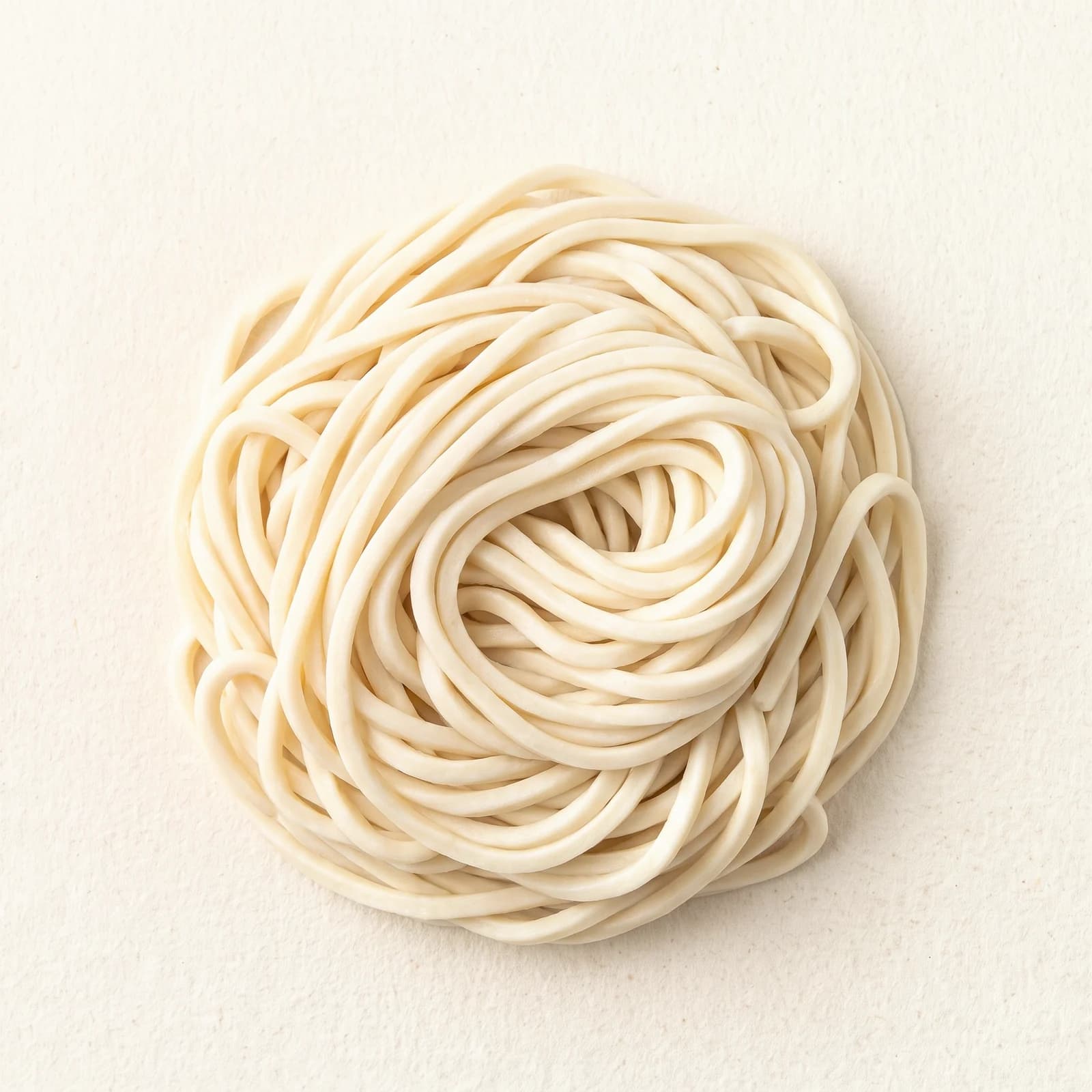
Bulk Fresh Udon Noodles for Wholesale & Commercial Supply
Standard fresh udon: 3 g protein per 100 g. The same noodle rebuilt with wheat gluten and pea protein: 11.4 g. The statement reads water, wheat flour, wheat gluten, pea protein, salt, tapioca starch, guar gum and lactic acid, in that order. The two sit side by side because the choice between them is the program, not the noodle.
Both are held 12 months. The protein line runs 6.85 mm at 50 to 75 percent moisture. The standard line tests at 68 percent. For a restaurant group that is a thick fresh noodle without the freezer space. For a retailer it is a fresh item that ships and stores like a dry one. For a brand building a high-protein line it is a panel that already reads 11.4 g.
- Multi-origin
- US inventory
- Open specs
- No brokers
Specifications
- Ingredients
- Wheat Flour (60%), Water (27%), Tapioca Starch (9%), Salt, Stabilizer: E401
- Allergens
- Wheat
- Shelf life
- 12 months
- Origin
- China
- Energy per 100 g
- 514 kJ
- Protein per 100 g
- 3 g
- Carbohydrate per 100 g
- 26 g, sugars 2 g, fiber 4 g
- Fat per 100 g
- 0.3 g
- Sodium per 100 g
- 330 mg
- Color and moisture
- Uniform and consistent, moisture 68%
- Mycotoxin results
- Deoxynivalenol (Vomitoxin): 236 ug/kg; Zearalenone (ZON): Not detected
What You Can Change
- Protein. 3 g per 100 g standard, or 11.4 g on the protein line.
- Cut. 6.85 mm on the protein line.
- Moisture. 68 percent tested on the standard line, 50 to 75 on protein.
- Stabilizer. E401 on the standard line, guar gum on the protein line.
- Starch. Tapioca starch at 9 percent in the standard statement.
Private Label
Pick the standard line or the protein line at 11.4 g per 100 g, and the pack your customer opens. Our team adapts your artwork and builds the allergen statement from the specification you approve.
Pacific86 Is the Sister Company of Source86.
- Pacific86 runs on the same supplier network and the same audited vendors as Source86.
- Our team works on the ground in the countries where your product is made.
- The same FSQA team reviews the documentation for your order.
- Audited vendors
- 86
- BRCGS grade
- AA
- Countries with our team on the ground
- 15
- On-time delivery
- 98%
Tell Us What You Need
Questions Buyers Ask
+Standard or protein: how do you decide?
By what your program sells. The standard noodle carries 3 g protein for each 100 g. The protein line carries 11.4 g, because its formulation adds gluten from wheat, plus pea protein. If the panel is the reason the product exists, start from the protein line. If the bowl is the reason, start from the standard.
+What is in the standard fresh udon?
Wheat flour 60%, water 27%, tapioca starch 9%, salt and E401 as the stabilizer. It declares wheat as its allergen. A 100 g serving comes to 514 kJ, 3 g protein, 26 g carbohydrate, 0.3 g fat and 330 mg sodium.
+How thick is it, and how much moisture does it carry?
The protein line is cut at 6.85 mm and runs between 50 and 75 percent moisture. The standard line tests at 68 percent. Both sit well over the dry range, where a dry udon holds about 12 percent.
+What shelf life does fresh udon carry?
12 months, for both lines. A dry udon holds 24 and cooks from hard, so your kitchen sets the texture. Fresh udon gives up that second year for a noodle whose texture is set at the factory, not in your pot.
+Can you put the protein line under our brand?
Yes. You choose the line and the pack your customer opens. Our team adapts your artwork and builds the allergen statement from the specification you approve. On the protein line, that statement starts with wheat, since wheat flour and wheat gluten are both in the recipe.