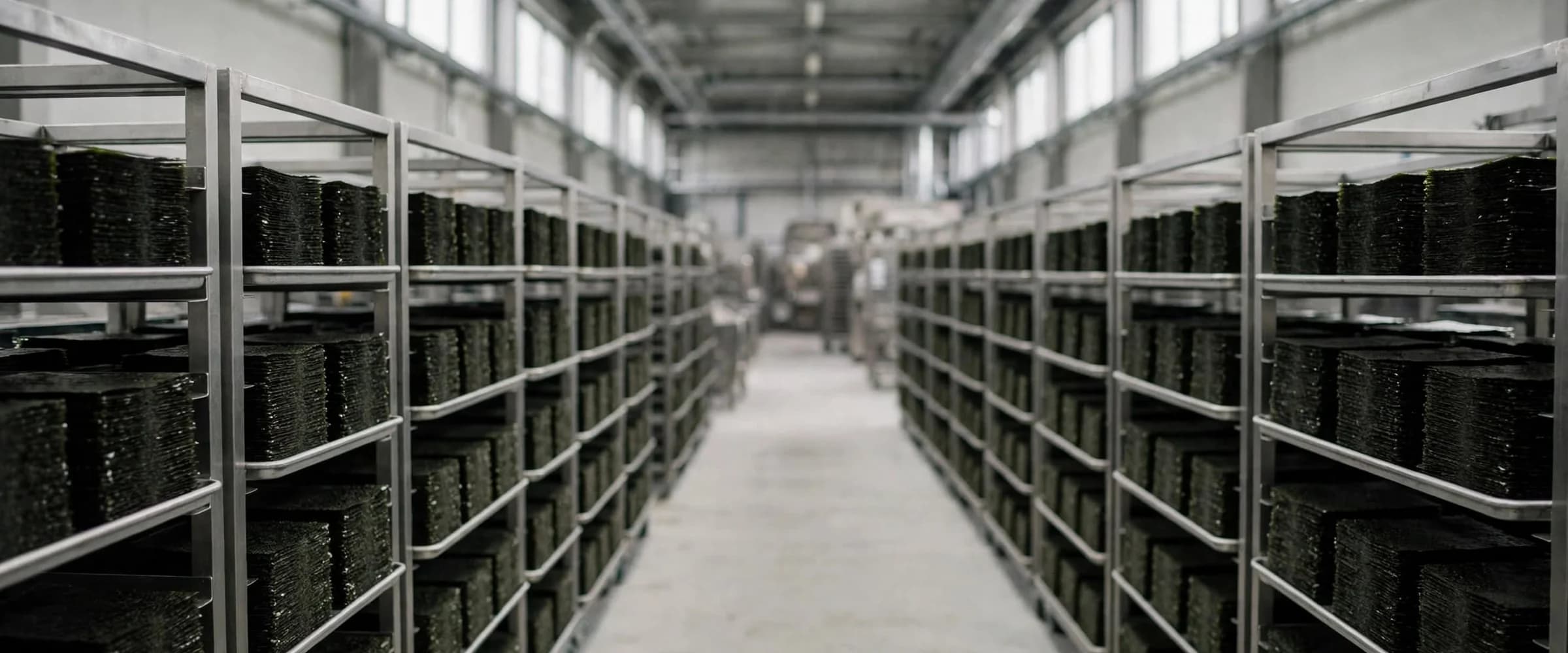
Bulk and Private Label Seaweed
Sushi nori, onigiri and handroll nori, kizami, roasted seaweed snacks, aonori, kombu and dried wakame. In bulk for your kitchens and plants, or packed under your label.
Types of Seaweed
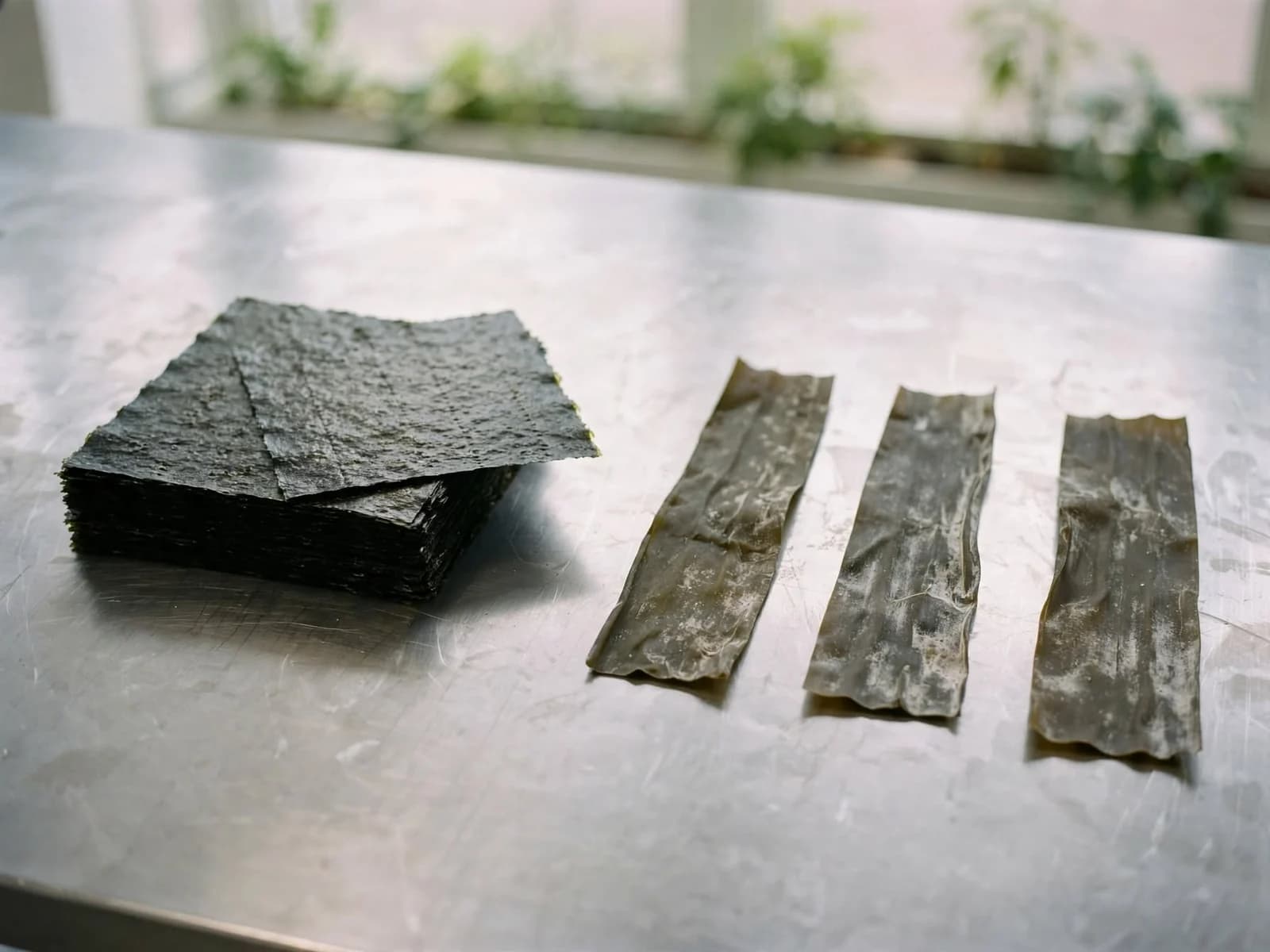
Seaweed is bought by the job it has to do. A sheet that rolls at speed. A sheet that is eaten from the pack. A leaf that goes into a broth or a soup. A garnish that stays crisp on a bowl.
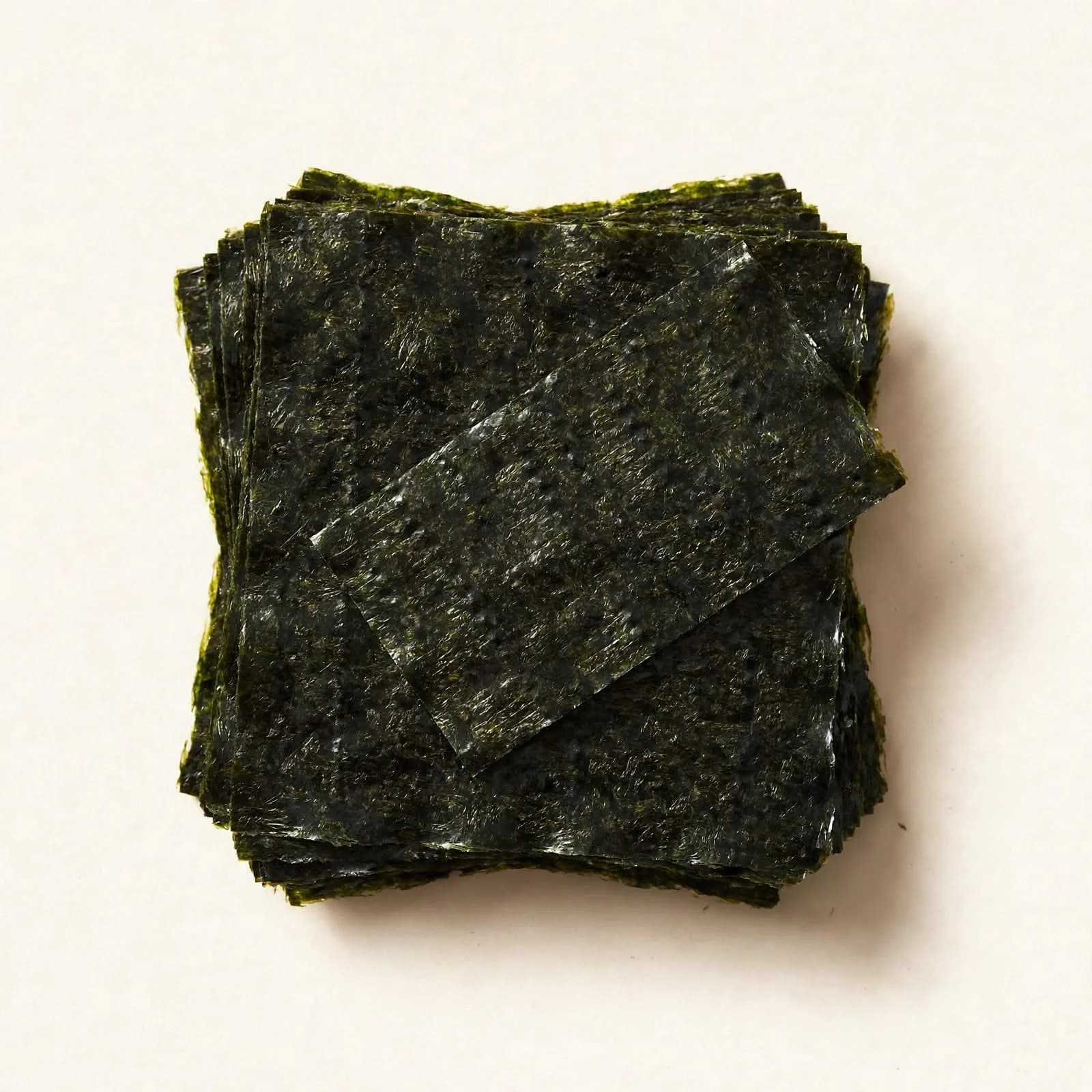
Rolls
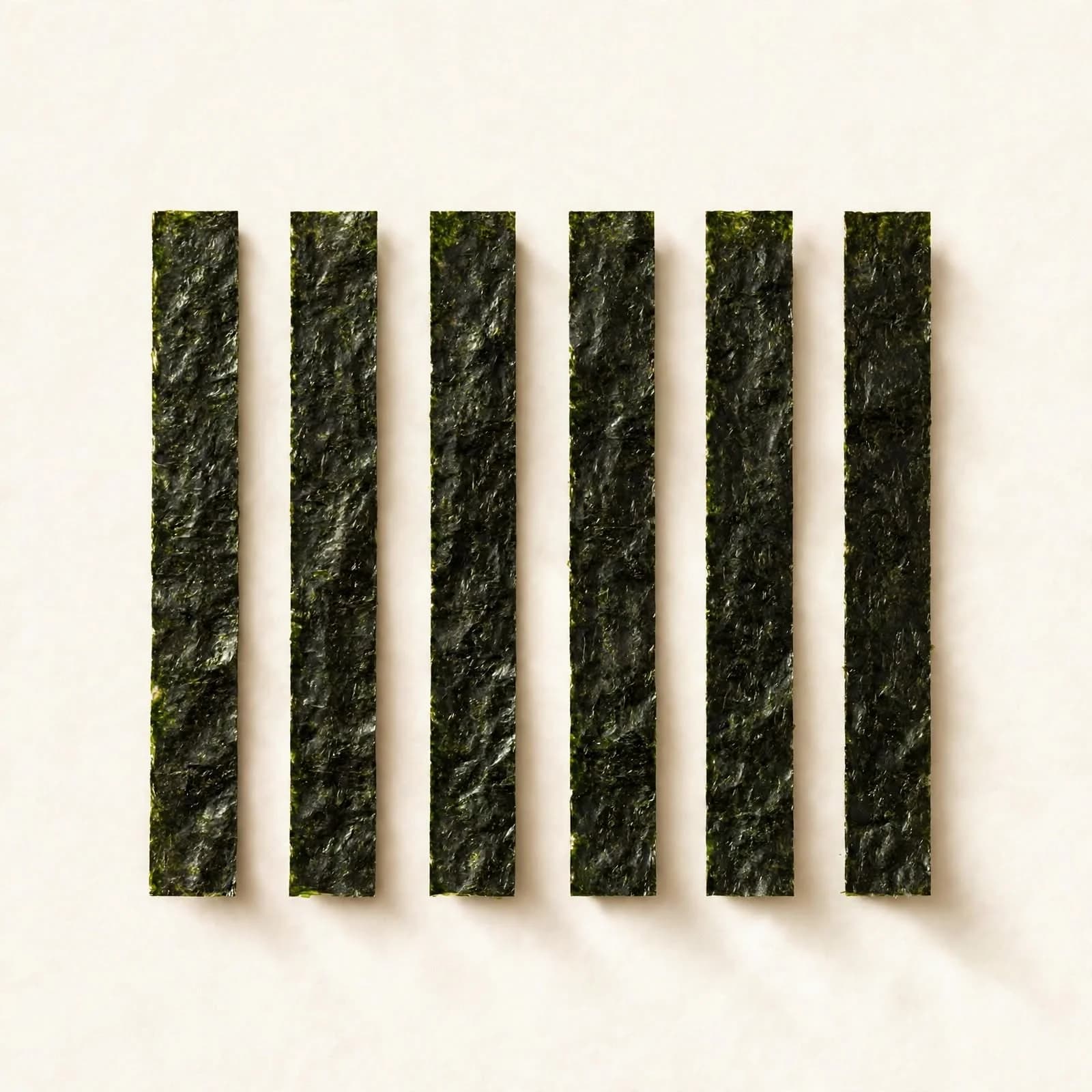
A sheet that rolls at speed. Toasted nori, full cut and half cut for sushi, and the onigiri and handroll cuts beside it.
Products
Toasted nori, full and half cut, onigiri and handroll cuts
Specified by
Sheet dimensions and moisture maximum
Has to
Hold under the hand and not split on the mat
Used as
A sheet that rolls at speed, for sushi
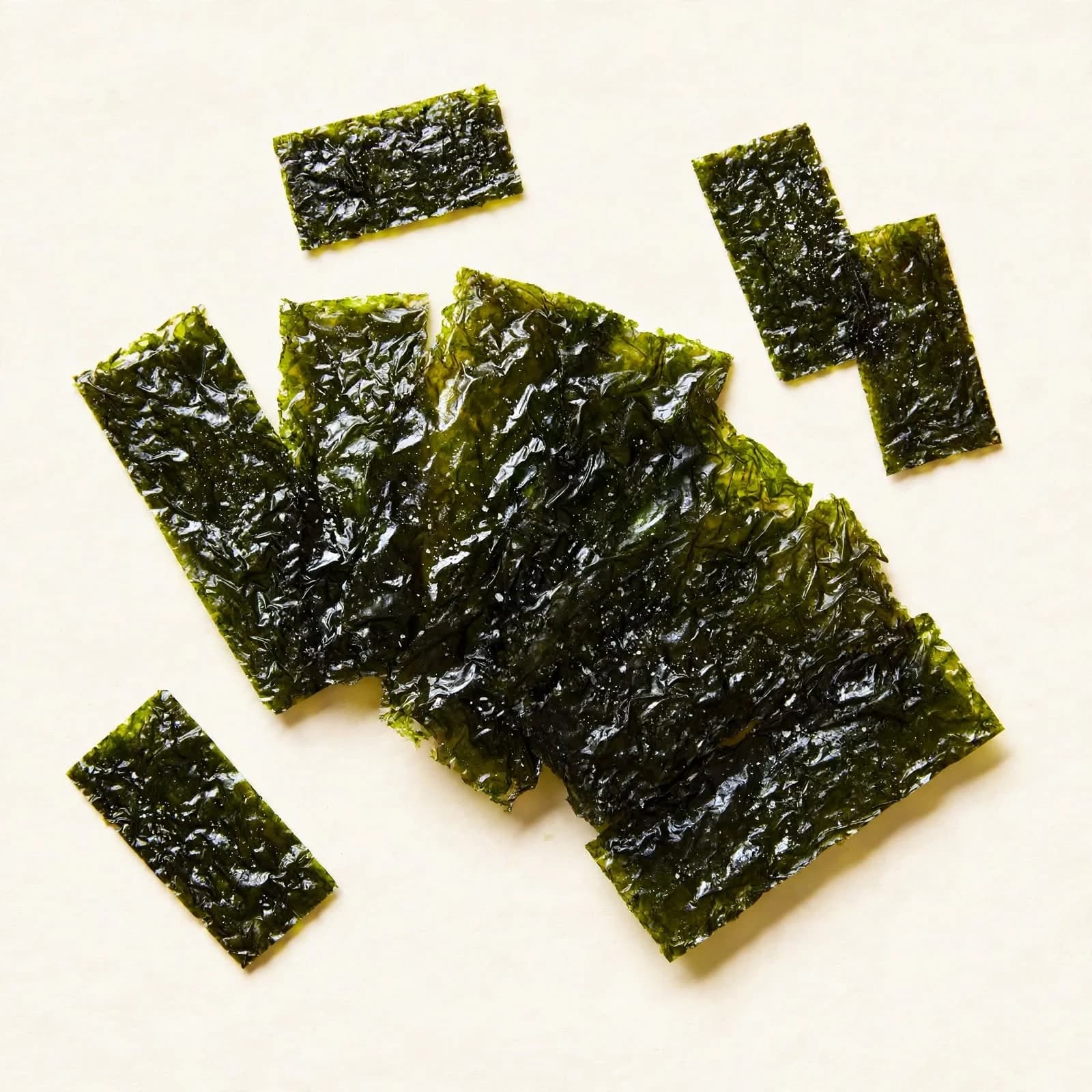
Eaten From the Pack
A sheet that is eaten rather than used. Roasted and seasoned seaweed, where the oil and the salt are the specification and sesame is the allergen line.
Products
Roasted and seasoned seaweed
Specified by
Oil, salt and pack
Has to
Be eaten rather than used
Used as
A snack, where sesame is the allergen line
Broth
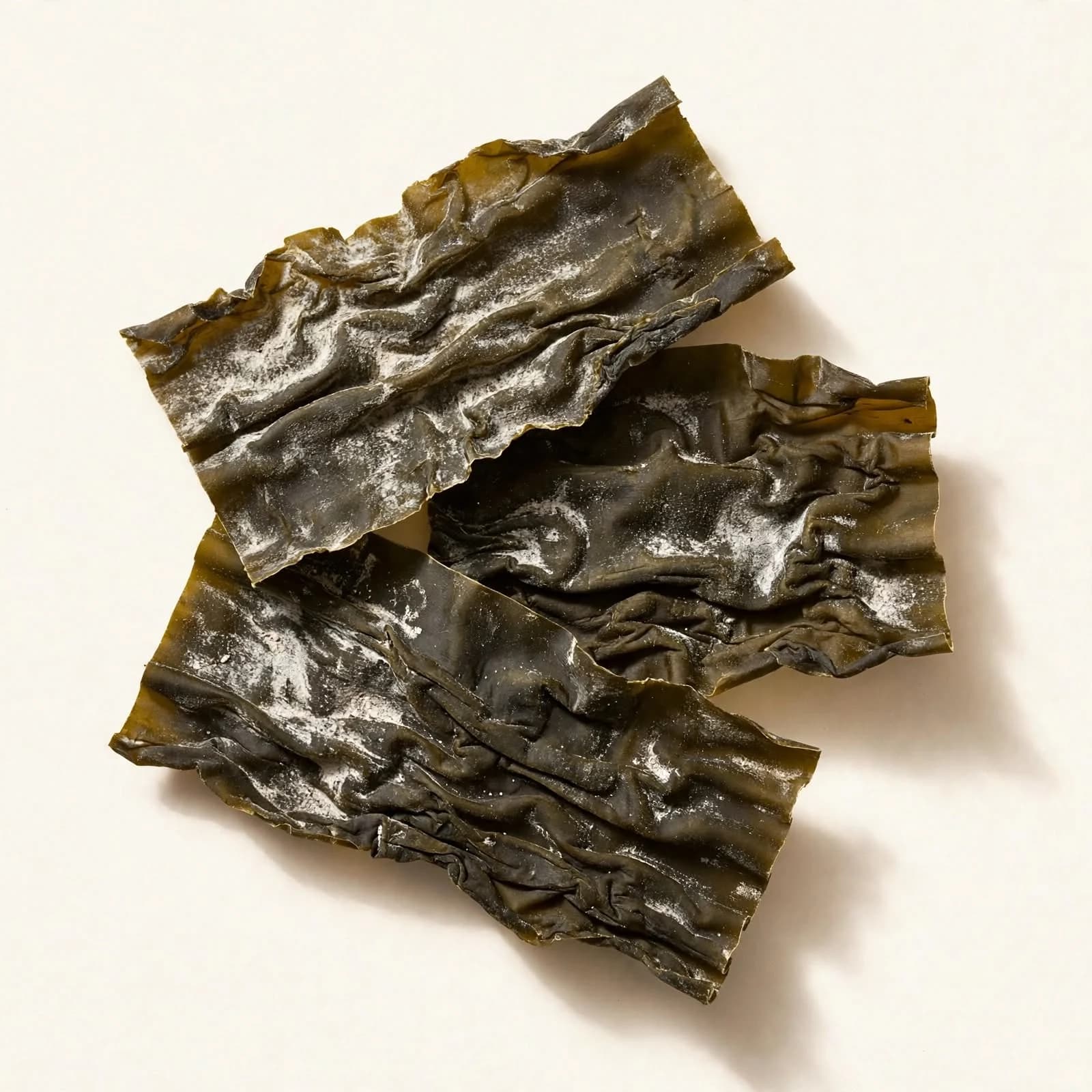
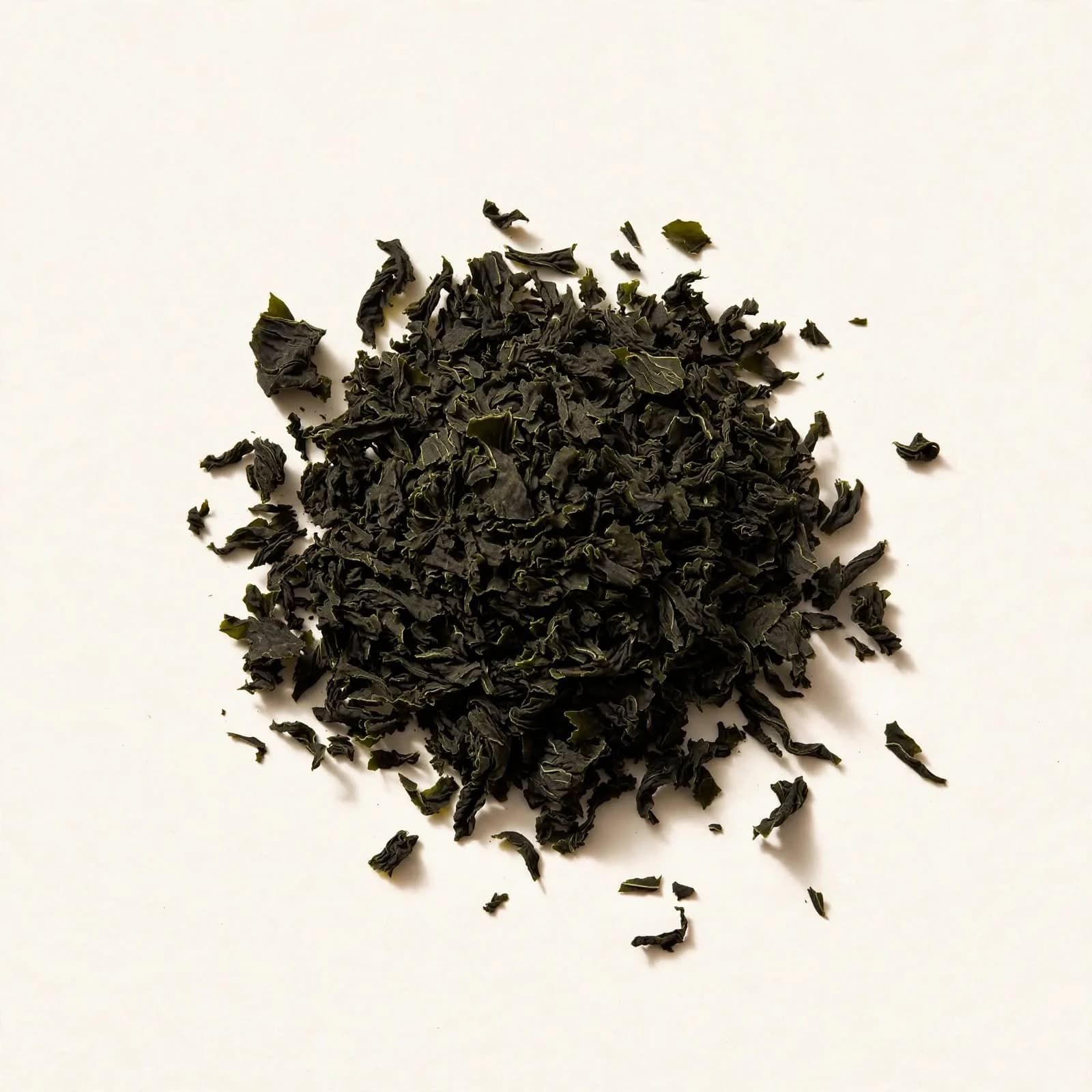
A leaf that goes into a broth or a soup. Dried wakame for the bowl and dried kelp for the stock, bought on rehydration and on species rather than on grade.
Products
Dried wakame and kombu
Specified by
Wakame by rehydration and stem out, kombu by species and thickness
Has to
Go into a broth or a soup
Used as
Wakame for the bowl and dried kelp for the stock, bought on rehydration and species rather than grade
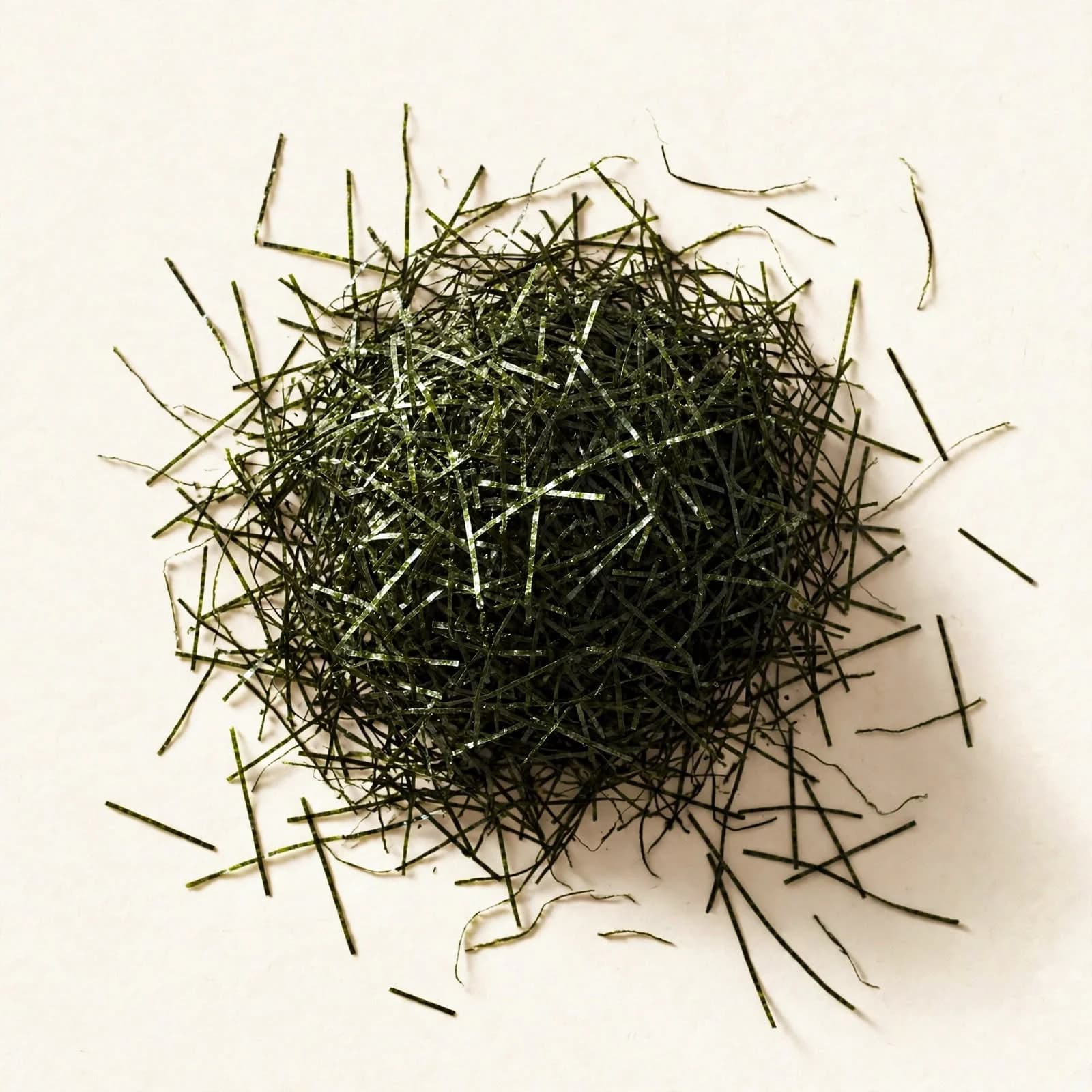
Garnish
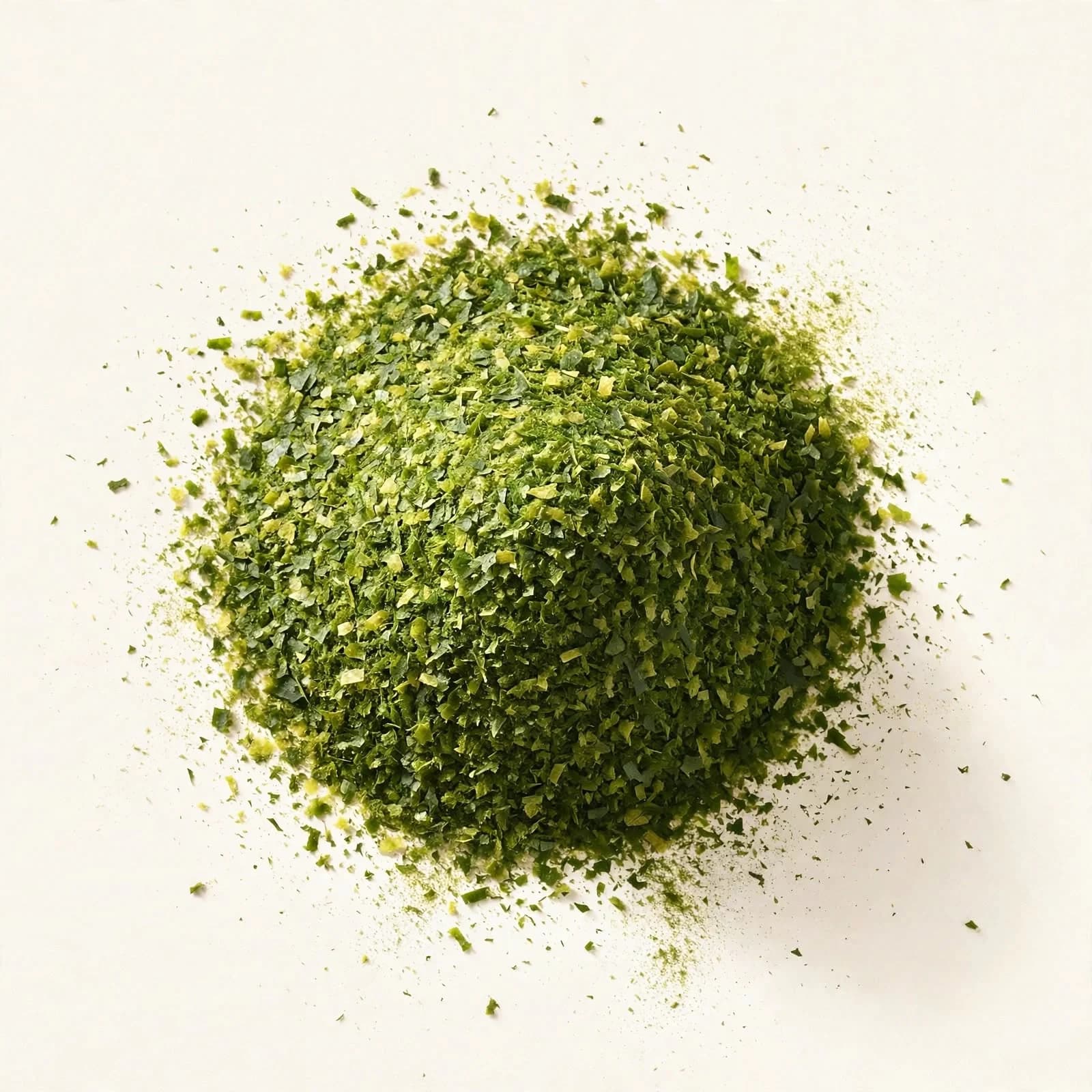
A garnish that stays crisp on a bowl. Shredded nori by the pinch and aonori for its color, both specified by cut and by species.
Products
Shredded nori and aonori
Specified by
Cut and species
Has to
Stay crisp on a bowl
Used as
Shredded nori by the pinch and aonori for its color
Two tests decide every seaweed inquiry before price. The heavy metals result on the lot, because cadmium and lead are the reason seaweed products get pulled from California shelves. And the allergen and cross-contact statement, because sesame is declared on nearly every roasted sheet and the water the seaweed grew in is shared with shellfish.
Shelf life on the documented line is a minimum of 12 months. Every product is quoted against your own pack. Where a line's own specification is on file, it is published here; where it is not, the page shows typical figures for the product type and the specification comes with your quote.
What You Can Change
Grade and sheet weight. A grade tier defined in physical terms.
Origin and species. As the record states them, cultivated or wild.
Retail or foodservice pack, and private label. Printed or plain pouch.
Documentation and testing scope. Which certificates travel with the shipment.
Count and pack. Kilograms per bag, bags per case.
What to Check Before You Commit
Grade in Physical Terms, Not Tier Names
The retail private label buyer whose pack sits beside a national brand at a known price. The emerging brand will trade a grade down for margin, and the foodservice group cares less about color than about the next line.
Tear and Handling at Production Speed
The foodservice group and the grocery sushi commissary, who trial one kitchen before committing, because a sheet that splits or a shred that clumps costs labor every shift.
Lot-Level Documentation: Heavy Metals, Moisture, Micro and the Allergen Statement
The retail buyer's compliance team refuses to list without it, and the emerging brand cannot get it from small suppliers and buys from whoever offers it. Foodservice asks after the first incident.
Origin and Species Named From the Record
All three buyers, for different reasons: the retail label and country-of-origin marking, the brand's story, and the foodservice quote comparison, because two origins are not the same quote.
Pack Architecture That Fits the Channel
The foodservice group, for whom the bag count and the case count are the product, and the retail buyer, for the retail count and the shelf-ready case. The emerging brand often starts with the wrong pack.
Supply Continuity Across the Harvest
The retail buyer on an annual contract with a fixed shelf price, because nori is a winter crop and a short season moves grade and price. Foodservice feels it as a price change; the emerging brand does not know it exists until it arrives.
Where These Go
Grocery Sushi and Sushi Bars
Toasted nori by the case, full and half cut.
Ramen Shops and Japanese Kitchens
Wakame for miso soup and dried kelp for dashi.
Poke, Rice Bowl and Grain Bowl Chains
Shredded nori by the pinch, where the shred has to portion without clumping and stay crisp through service.
Takoyaki, Okonomiyaki and Seasoning Blenders
Aonori for its color, on finished fried dishes and in snack seasoning blends where a green seaweed note is the point.
Retail Private Label
Roasted seaweed snacks in single-serve and multipack, the fastest-growing retail seaweed format, and 10-sheet sushi nori for the grocery, Asian grocery and natural channels.
Manufacturers
Those who roast and season their own buy the unroasted sheet rather than the finished one.
Pacific86 Is the Sister Company of Source86.
- Pacific86 runs on the same supplier network and the same audited vendors as Source86.
- Our team works on the ground in the countries where your product is made.
- The same FSQA team reviews the documentation for your order.
- Audited vendors
- 86
- BRCGS grade
- AA
- Countries with our team on the ground
- 15
- On-time delivery
- 98%
Questions Buyers Ask
+Is seaweed a fish or shellfish allergen?
No. Seaweed is none of the nine US major allergens and it is neither fish nor shellfish for labeling. The question that matters is cross-contact, which is per product and per plant, and sesame, which is declared on nearly every roasted and seasoned sheet since the FASTER Act. The allergen row on every page here renders whether or not a statement exists, because an empty allergen row and a clean one read the same and mean the opposite.
+Where does your seaweed come from?
From the record, and only from the record. The documented nori line states China. A product name is not an origin: much of what the trade sells under Japanese and Korean names is grown elsewhere, so we do not put a country in a heading, a title or a product name that its own document does not carry.
+Do you publish a heavy metals result?
Where the document carries one. The documented nori line states none, so none appears on its page, and we do not describe a testing program we have not built. Heavy metals are the first thing a US compliance team asks a seaweed supplier about, so the honest answer is which documents exist rather than which ones would be convenient.
+How long does a nori sheet keep, and what controls it?
The documented line states a minimum of 12 months under its own storage conditions, stored dry and cool. Moisture is the control, and that sheet caps it at 10 percent. A sheet that takes up moisture goes limp rather than spoiling, which is why the moisture maximum and the storage condition are two separate rows rather than a single line about freshness.
+Is the nori roasted, and can I buy it unroasted?
The documented line is roasted. A manufacturer that roasts and seasons its own sheet buys the laver before the toaster instead, which is the same material at an earlier stage rather than a different seaweed. Tell us which stage you buy at and we quote against that.