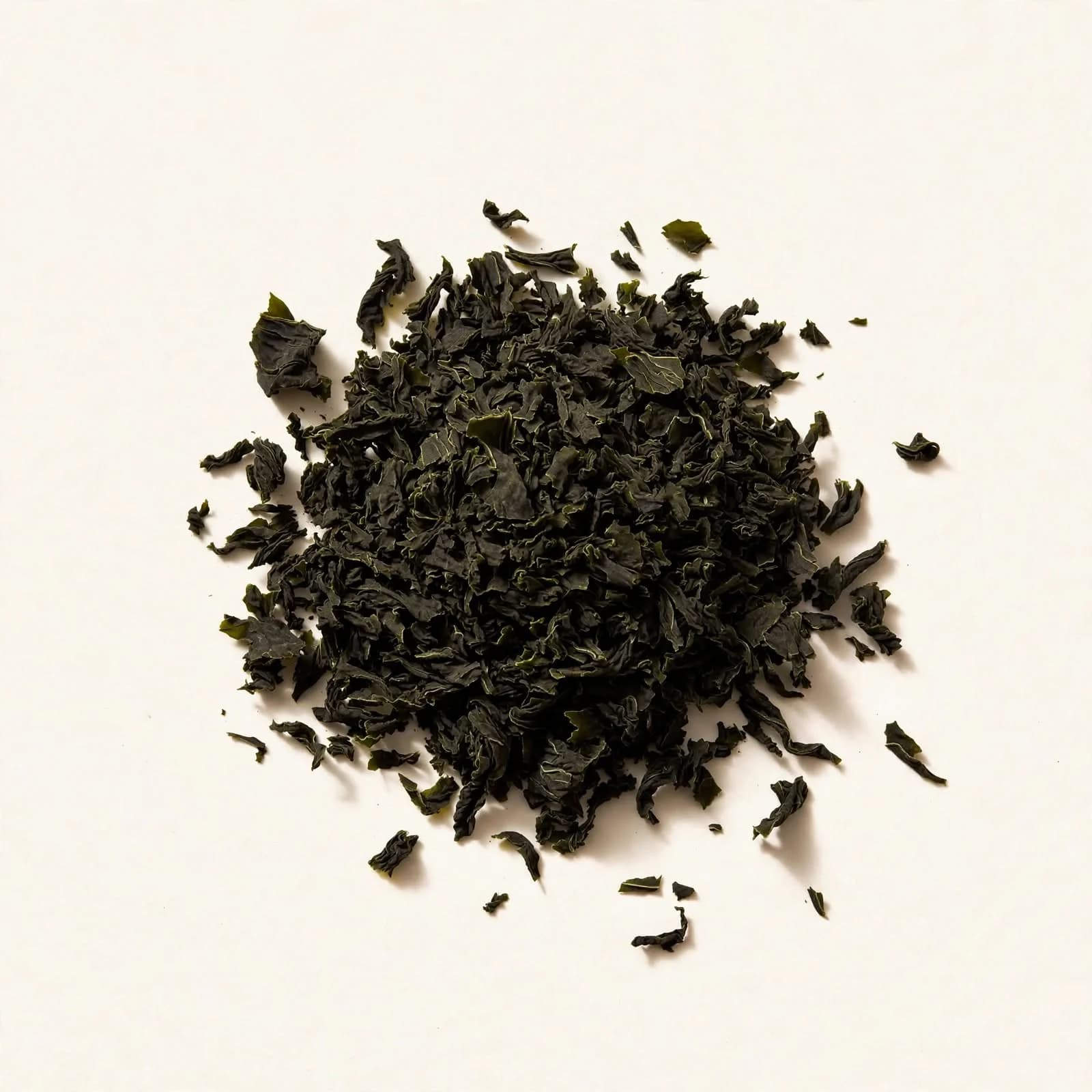
Bulk Kombu (Dried Kelp) for Wholesale & Commercial Supply
Kombu is available by species and grade, with each line identified by the species and origin stated on its specification. Grades vary by region and blade thickness, giving buyers a more precise way to compare options than a generic kombu label.
Kombu goes into broth, food-manufacturing and private-label programs. Tested iodine values are provided when available for the specific line.
A natural white bloom may appear on the dried blade as mannitol forms on the surface during drying. This is a normal product characteristic and not mold or a defect.
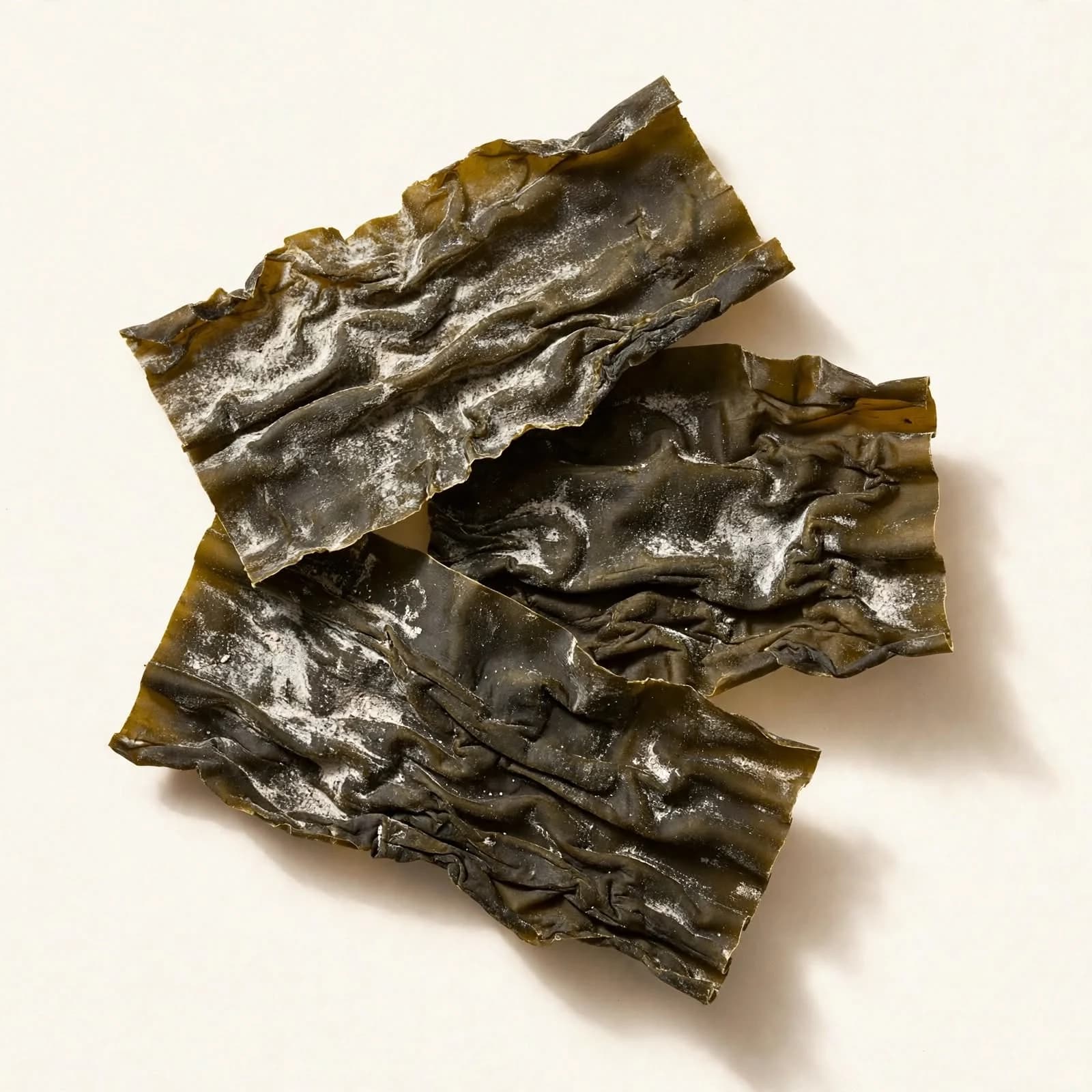
- Multi-origin
- US inventory
- Open specs
- No brokers
Product Specifications
- Product
- Kombu
- Species
- Named on the specification for your line
- Grade
- By region and blade thickness within the named species
- Allergens
- Statement on request
Product Customization Options
The following customization options allow you to adapt the product to different commercial requirements and end uses.
- Species: Selected by the species identified on the supplier specification.
- Grade: Available by region and blade thickness within the named species.
- Iodine documentation: Tested iodine values can be provided when available for the selected line.
- Pack format: Commercial and private-label pack configurations can be matched to the sourcing program.
Private Label
Choose the kombu species and grade for your private-label program. The finished kombu is packed under your label, with iodine stated only when a tested value is available for the selected line, and each lot is checked against the agreed specification.
Commercial Applications
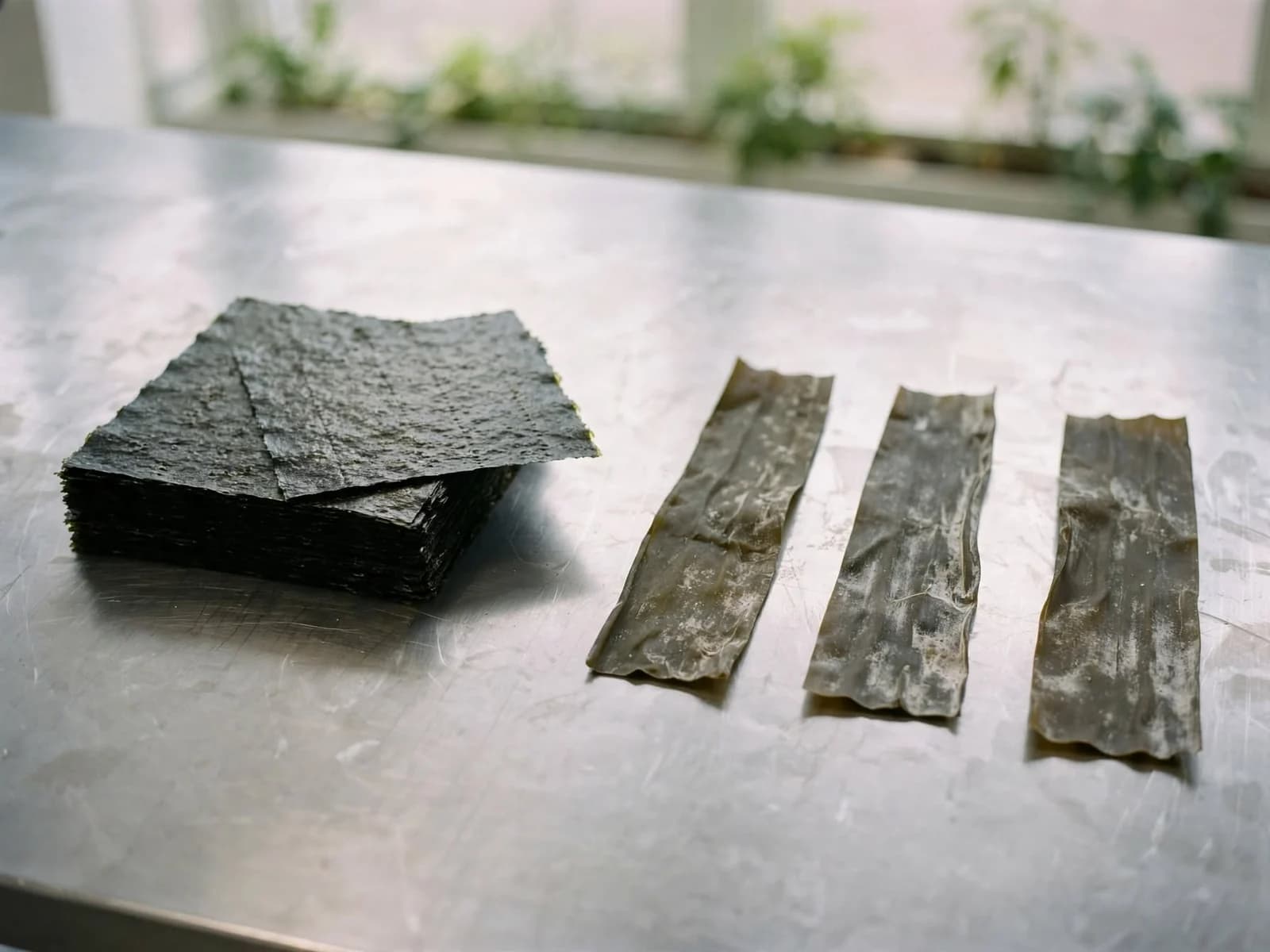
Kombu is commercially useful where formulators need a clean source of umami, broth depth or a seaweed component with a distinct functional role.
- Dashi and broth systems: Used as a primary umami source in dashi, ramen broth, soup bases, hot-pot bases and concentrated stock systems.
- Plant-based stocks: Supports vegetarian and vegan broth systems where formulators want savory depth without relying on fish-based stock.
- Pickles and preserved foods: Kombu can be used in pickled products and tsukudani-style preparations, where the seaweed becomes part of the finished food rather than only an extraction ingredient.
- Simmered prepared foods: Suitable for simmered dishes and prepared-food formulations that incorporate the softened kombu itself after hydration.
- Dashi kits and meal components: Kombu can be packed into dashi kits, soup kits and other prepared meal systems that use it as a dedicated broth component.
Pacific86 Is the Sister Company of Source86.
- Pacific86 runs on the same supplier network and the same audited vendors as Source86.
- Our team works on the ground in the countries where your product is made.
- The same FSQA team reviews the documentation for your order.
- Audited vendors
- 86
- BRCGS grade
- AA
- Countries with our team on the ground
- 15
- On-time delivery
- 98%
Tell Us About Your Product Requirements
Questions Buyers Ask
+Which species, and from which waters?
Both are named on the specification for your line, never inferred from the product name. A kelp is sold under the name its specification carries.
+How much iodine is in it?
Kombu carries more iodine than most foods and the US sets no limit, which makes it a labeling question. The figure for your line is the tested one on its specification, never an estimate.
+What is the white bloom on the blade?
Mannitol, a natural sugar alcohol that blooms on the surface as the blade dries. It is not mold and it is not a defect.