Bulk Konjac and Shirataki Noodles for Wholesale & Commercial Supply
Konjac noodles are packed in water, so drained weight is the number to compare between suppliers, not net weight. The ingredient statements are short: konjac powder, water and citric acid; or water, konjac flour and calcium hydroxide.
The panel is why buyers come. 6 kcal per 100 g. Under 0.2 g carbohydrate on one line and up to 5.3 g fiber on another. Zero fat. Shelf life runs 12 to 14 months. We publish the numbers and leave the claim to you, because the claims that are defined and the claims that are marketing are not the same list.
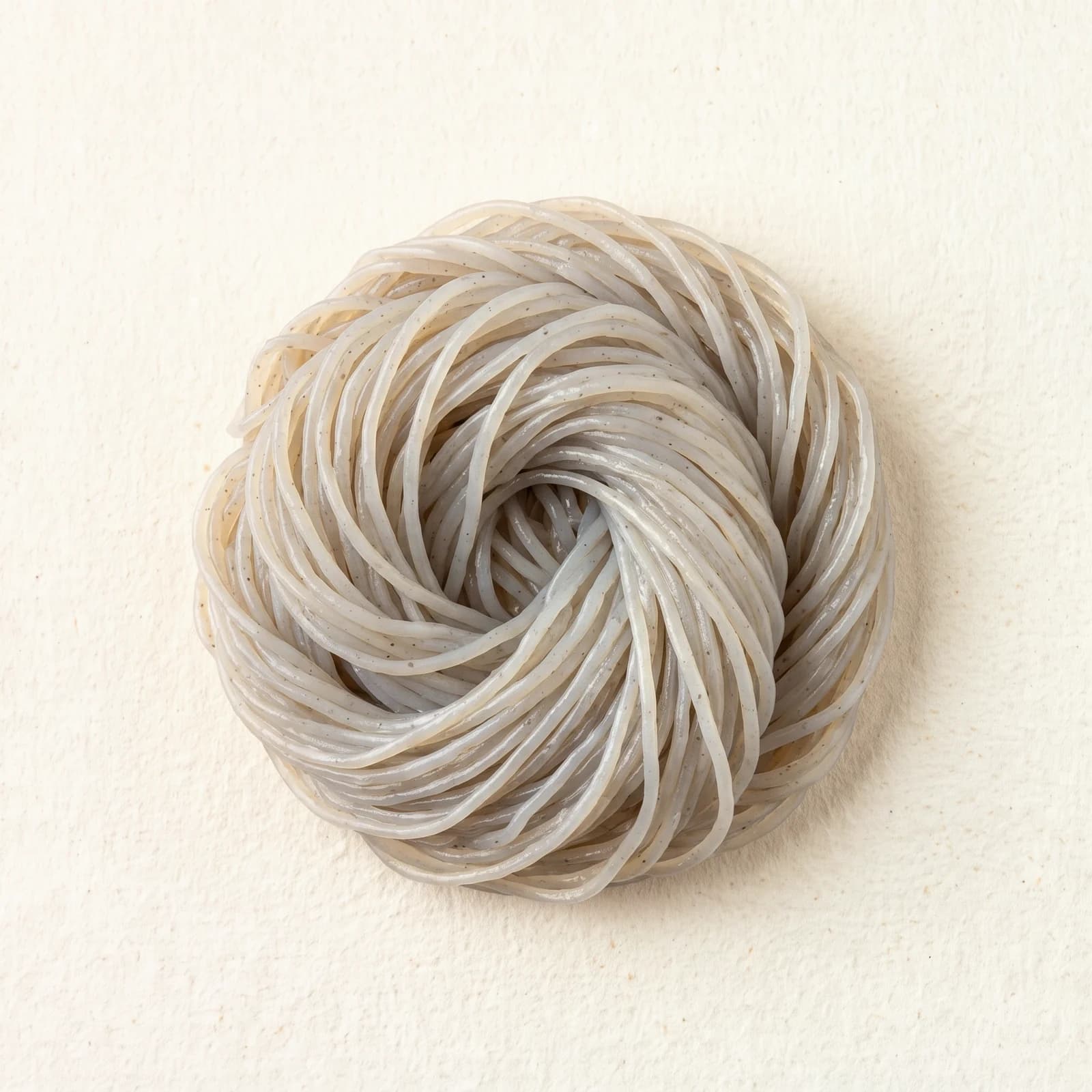
- Multi-origin
- US inventory
- Open specs
- No brokers
Specifications
- Ingredients
- Konjac powder, water, citric acid
- Allergens
- None declared
- Shelf life
- 14 months
- Storage
- Stored in cool & dry place. Kept away from strong light and heat.
- Origin
- China
- Energy per 100 g
- 6 kcal
- Protein per 100 g
- <0.1 g
- Carbohydrate per 100 g
- 1.3 g, fiber 0.5 g
- Fat per 100 g
- <0.01 g
- Sodium per 100 g
- 0.29 mg
- Color and moisture
- Little white & transparent
What You Can Change
- Base. Konjac powder and citric acid, or konjac flour and calcium hydroxide.
- Weight. Drained and net weight both stated, since the noodle packs in water.
- Fiber. Up to 5.3 g per 100 g on one line.
- Carbohydrate. 1.3 g per 100 g as published, under 0.2 g on another line.
- Protein. Added through pea protein.
Private Label
Your konjac line can run on konjac powder with citric acid, or on konjac flour with calcium hydroxide. Drained and net weight both go on your label, because the noodle packs in water.
Pacific86 Is the Sister Company of Source86.
- Pacific86 runs on the same supplier network and the same audited vendors as Source86.
- Our team works on the ground in the countries where your product is made.
- The same FSQA team reviews the documentation for your order.
- Audited vendors
- 86
- BRCGS grade
- AA
- Countries with our team on the ground
- 15
- On-time delivery
- 98%
Tell Us What You Need
Questions Buyers Ask
+Can I put keto or low-carb on the pack?
That claim is yours to make, and the numbers publish so you can test it against them. The published line, measured in 100 g, comes to 6 kcal, 1.3 g carbohydrate and 0.5 g fiber, under 0.01 g fat and under 0.1 g protein. Another line reads under 0.2 g carbohydrate. Some claims carry a regulatory definition and some do not, so check yours before the art goes to print.
+How do I compare konjac quotes from different suppliers?
On drained weight. The noodle sits in water, so a heavy net weight can hide a light pack of noodle. Ask every supplier for both figures. Your own label will carry both too.
+How is it stored, and for how long?
The published line keeps 14 months in cool, dry storage, shielded from strong light and heat. Across the konjac lines, shelf life runs 12 to 14 months.
+Is anything blended in, such as oat fiber or soy?
Neither published statement lists one. One reads konjac powder, water and citric acid. The other is water, konjac flour and calcium hydroxide. Three ingredients each, so the back of your pack stays short.
+What can I change on a konjac line?
Cut and shape, first. Konjac publishes no width, so the shape starts from your brief. Flavoring, on the lines that carry it. Protein, through pea protein, from a base that reads under 0.1 g. And the pack: format, size, and retail or foodservice.