
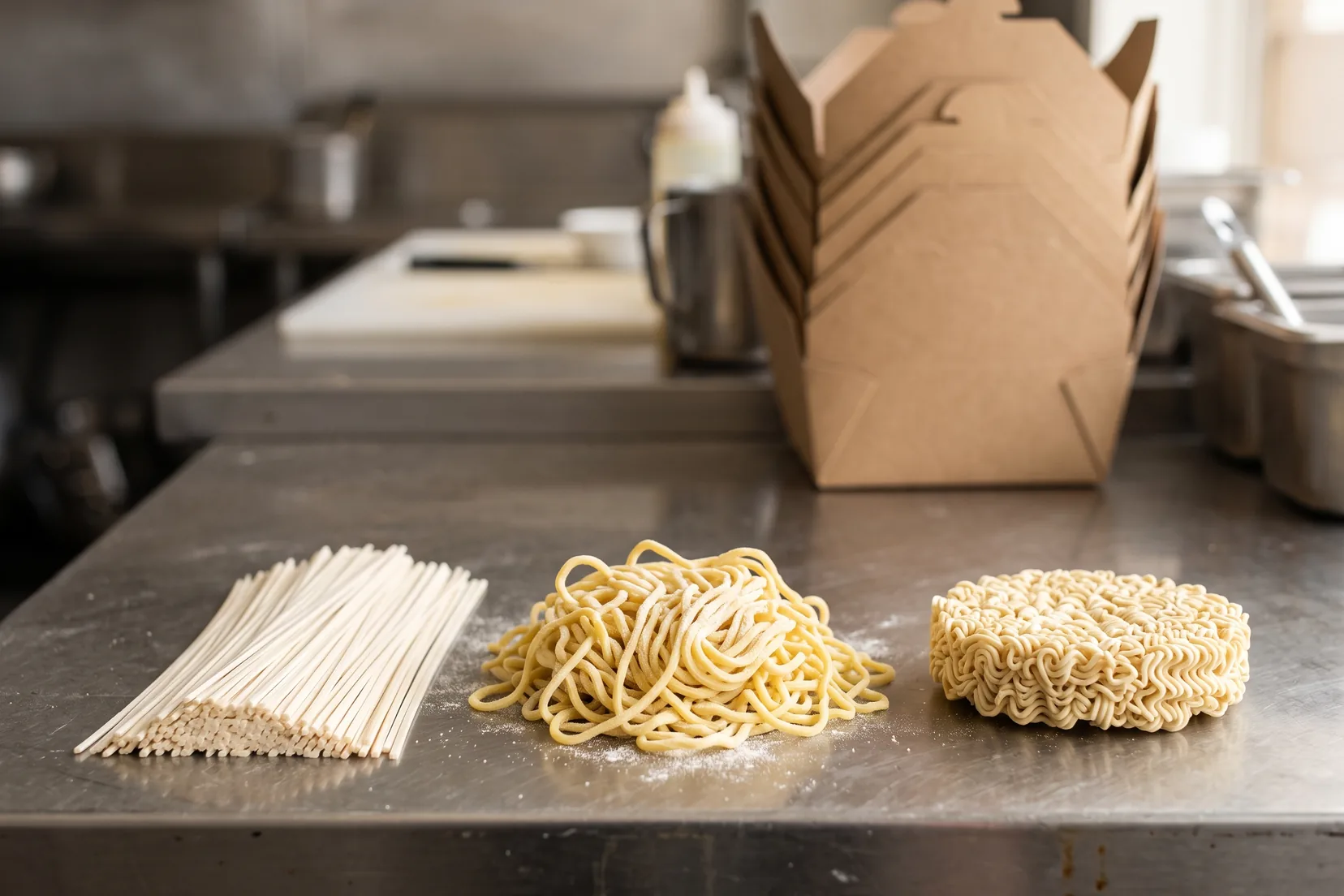
Ramen is a wheat noodle with three lives: dry, fresh and instant. Each one changes the shelf life, the panel, the storage and the buyer it suits. Here is how to tell them apart and how to specify the one your program needs.
Ask ten people what ramen is and you will get ten bowls. A procurement team needs something narrower: a noodle with a statement, a cut, a moisture figure and a shelf life. Start there and the bowl takes care of itself.
What Ramen Noodles Are
Ramen is a wheat noodle. The dish is Japanese, with roots in Chinese wheat noodles, and the bowl is built from a broth, a seasoning base, the noodle and the toppings. Shoyu, shio, miso and tonkotsu are broth styles, not noodles.
The noodle is the part that travels. A restaurant group can make its own broth in every unit, but it cannot run a noodle line in every unit. A retailer selling a ramen kit is selling a noodle with a seasoning beside it. In each case the buying decision is about the noodle, and the noodle is what a supplier quotes.
For a buyer, ramen comes down to three questions. What is in the dough. What format the noodle arrives in. And how thick, long and shaped it is.
What Goes Into the Dough
A plain ramen noodle needs very little. Our published dry ramen reads wheat flour 88 percent, water 11 percent and salt 1 percent. Wheat is the one allergen it declares. Everything else you see on a ramen statement is a choice, and each choice changes your label.
- Kansui. Alkaline mineral water, usually sodium and potassium carbonate. It gives the classic springy bite and the pale yellow color. Color alone will not tell you it is there: our shelf-stable fresh ramen gets its light yellow from curcumin at 0.001 percent. If your recipe needs an alkaline noodle, put it in the brief.
- Egg. In some ramen and not in others. When it is there, it is on the allergen line. The dry ramen we publish contains none. If your customer expects an egg noodle, look at our lo mein and chow mein noodles.
- Starch, oil and acid. The published fresh ramen adds modified tapioca starch at 7 percent, corn oil at 0.5 percent, and lactic acid and sodium lactate. They are what let a noodle at 61 percent moisture hold its texture at room temperature.
- Protein. The dry ramen carries 11 g per 100 g from flour, water and salt alone. We raise it with wheat gluten and pea protein. Give us the figure your panel needs and we build the dough to it.
Three Formats: Dry, Fresh and Instant
Format is the decision that changes everything downstream: shelf life, storage, the nutrition panel and the labor in the kitchen.
- Dry and instant ramen shelf life
- 24 mo
- Dry and instant ramen shelf life
- Fresh ramen, held at room temperature
- 14 mo
- Fresh ramen, held at room temperature
- Millimeter cuts in the dry ramen line
- 1.75 to 3
- Millimeter cuts in the dry ramen line
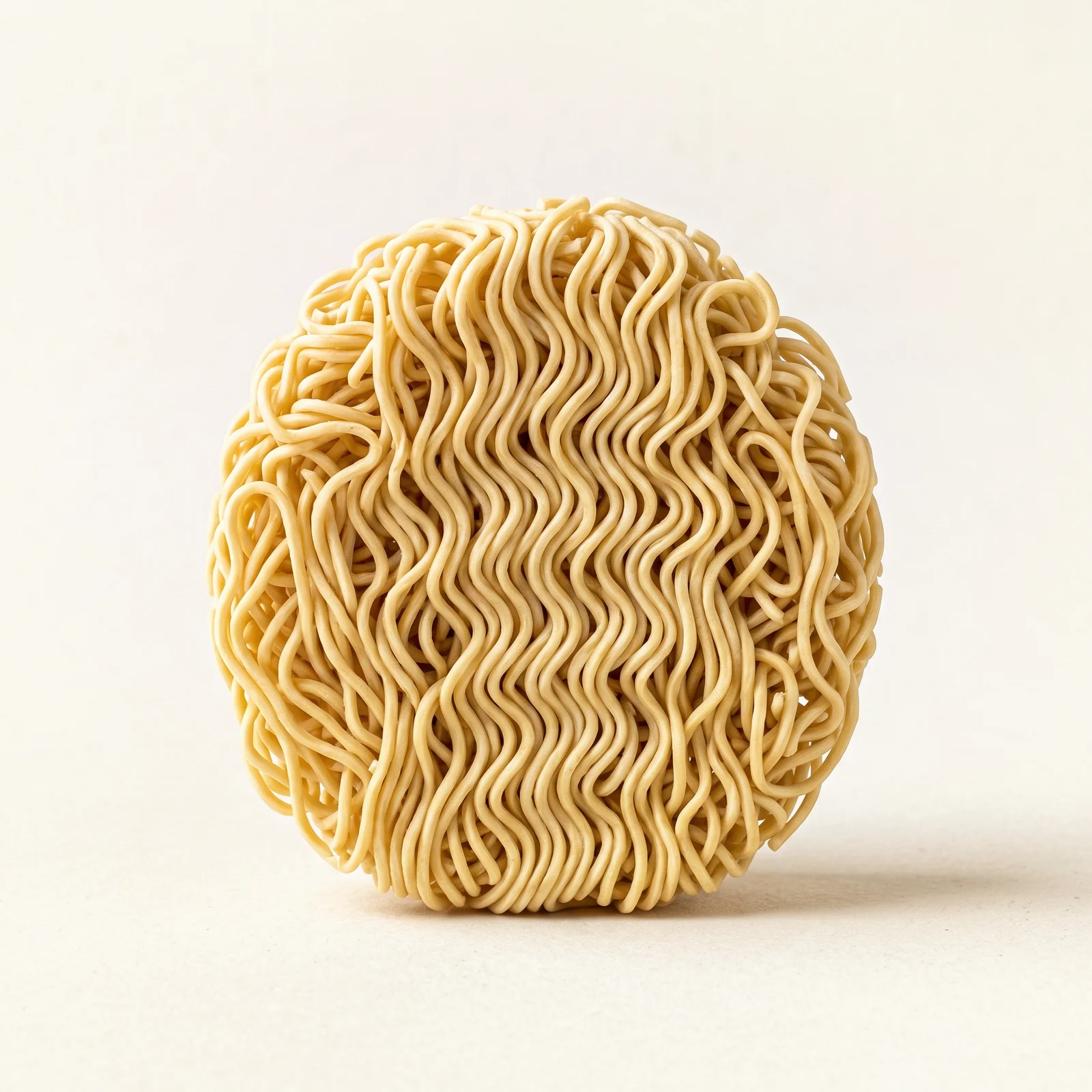
Bulk ramen noodles, dry
- 24 months shelf life
- Allergens: Wheat
- Origin: China
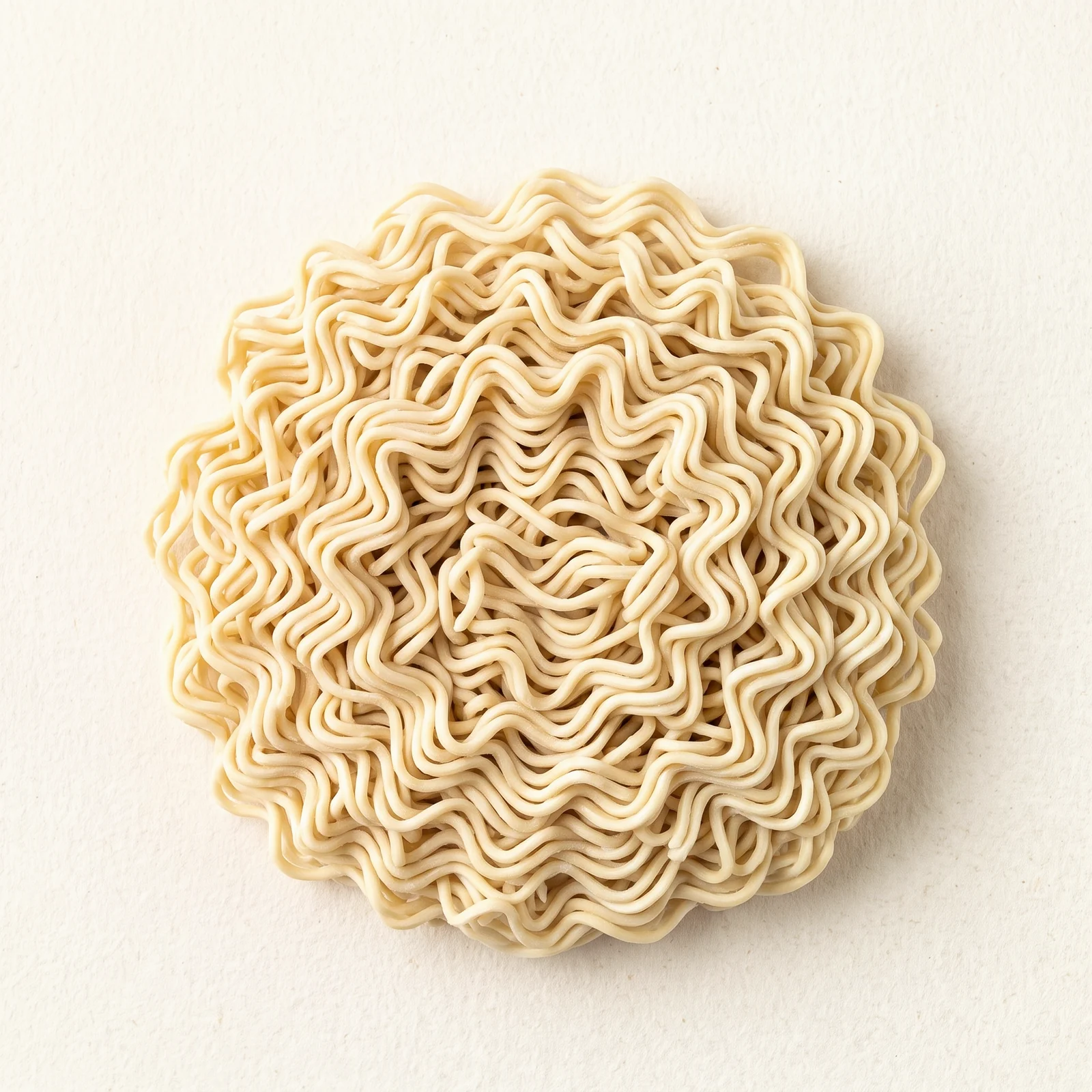
Wholesale fresh ramen noodles, shelf stable
- 14 months shelf life
- Allergens: Wheat
- Origin: China
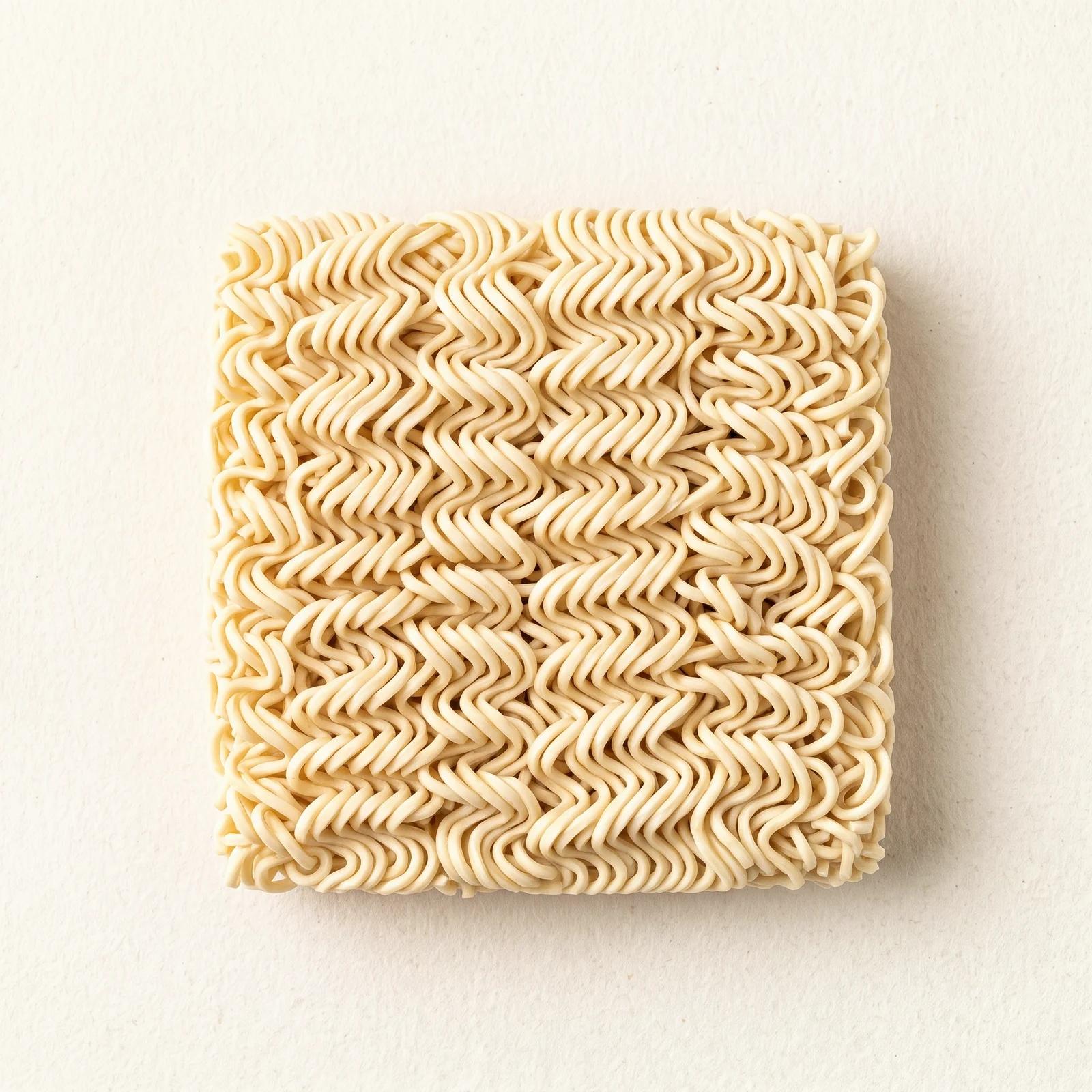
Bulk instant noodles, fried and non-fried
- 24 months shelf life
- Allergens: Wheat
- Origin: China
Dry Ramen
Made, cut and dried until hard. It arrives at about 12 percent moisture (the published line tests at 12.1) and holds 24 months. Per 100 g it reads 363 kcal, 11 g protein, 1.6 g fat and 285 mg sodium. It cooks from dry, so the kitchen sets the texture. This is the format for retail multipacks and meal kits that cannot ship cold.
Fresh Ramen
Fresh does not mean frozen. The published line is made at 50 to 75 percent moisture, tested at 61, packed as a cake and held at room temperature for 14 months. It reads 160 kcal and 160 mg sodium per 100 g, low next to dry because the noodle is already more than half water, so compare panels per portion. It suits kitchens that want a ramen-shop bite without a freezer.
Instant Ramen
Cooked, then dried a second time, and that second drying splits instant in two. A fried cake sits at 3 percent moisture and reads 445 kcal, 16.7 g fat and 925 mg sodium per 100 g. A non-fried, air-dried cake sits at about 14.5 percent and reads 355 kcal, 1.1 g fat and 80 mg sodium. Both start as a 9 cm, 40 g cake and hold 24 months.
They are two products, not two options on one product. Decide which one you are selling before you write the brief. Bulk instant noodles publishes both panels side by side.
Cut and Shape
After format, the cut is the line a kitchen notices first. It sets the cook time, the bite and how long the noodle lasts in the bowl.
The published dry ramen runs in 1.75, 2 and 3 mm cuts, hand-pulled noodles go up to 8 mm, and a chuka soba style runs at 1.2 mm. The fresh ramen's standard is a 2.3 mm round noodle at 46 cm, with the length set to your bowl.
- Thinner cuts cook fast and soften fast. They suit a bowl eaten straight away.
- Middle cuts are the general-purpose ramen noodle. Most menu bowls and retail kits sit here.
- Thicker cuts hold through a longer stand, a delivery trip or a dipping serve.
Shapes run round, rectangular, curly, nest, straight-cut and hand-pulled. Curly holds more broth, a nest portions by hand and packs neatly, straight cuts lie flat in a tray. One naming trap: chuka soba is a ramen style, not soba. And if your menu slot could also take a thicker, softer noodle in a lighter broth, compare dry udon before you sample.
Matching the Noodle to the Program
Start from how the noodle is sold and served, then work back to the specification.
- Retail and private label. The buyer reads the panel and the shelf life first. Dry and instant both hold 24 months, which works for a slow-turning international set. In the instant aisle a private label line usually competes on the panel: 80 mg sodium per 100 g non-fried against 925 fried. Private label walks through how a program is set up.
- Restaurant groups and foodservice. A kitchen buys on the cook and the hold. Fresh ramen cuts the cook to a short refresh with no freezer. Dry ramen asks for more labor and gives more control over texture.
- Meal kits and prepared meals. The noodle has to survive assembly, the cold chain or its absence, and a reheat. Dry at 12 percent moisture ships without cold packs. Tell us how the finished product is stored and reheated and we narrow the format.
Reading a Ramen Spec Sheet
These are the rows a ramen buyer checks first. On our product pages every one is published before you ask.
- Ingredient statement, in order, with shares. Check for egg, kansui, oil, color and preservatives.
- Allergens. Wheat on every ramen. Egg or soy where the recipe adds them.
- Moisture. About 12 percent for dry, 50 to 75 for fresh, 3 or about 14.5 for instant. It explains the shelf life and moves every nutrition figure.
- Shelf life and storage. 24 months for dry and instant, 14 for the shelf-stable fresh line, and the storage condition the document states.
- Microbiology. Aerobic plate count, yeast and mold, E. coli, Staphylococcus aureus, Salmonella and Bacillus cereus.
- Mycotoxins. For a wheat noodle, deoxynivalenol and zearalenone. The published dry ramen reads 236 ug/kg deoxynivalenol and zearalenone not detected.
- Origin. The published noodle lines state China, the figure that matters when a duty changes by country.
Every lot we ship carries a certificate of analysis against the specification you sign, and you get samples before you commit.
Storage, Cooking and Holding
Dry ramen and instant cakes want a cool, dry place out of direct sun. The fresh ramen is stored the same way, at room temperature. Once a pack is open, follow the storage line on the label.
- Use plenty of water. A crowded pot drops in temperature and the noodles stick.
- Cook the noodle apart from the broth and drain it well, or the starch clouds a clear broth.
- Taste a strand before the clock says it is done.
- Serve straight away. Every ramen keeps softening in hot broth, thin cuts fastest.
For a line kitchen, test the noodle in your own holding conditions before you commit.
Ordering Ramen Noodles in Bulk
A bulk ramen order is a specification first and a price second. Tell us:
- Format. Dry, fresh or instant, and for instant, fried or non-fried.
- Cut, shape and length. Or send the noodle you use now.
- Formulation. Standard, low gluten, higher protein, egg or no egg.
- Pack. Retail bag, multipack, cup, foodservice case or a kit portion.
- Volume and rhythm. How much, and how often.
A bag of the noodle you already buy settles cut, shape and color faster than any description. Plan with the ocean in the calendar: on the fresh line, roughly 30 days to make and 40 at sea from China, and Chinese New Year adds about a month.
Production runs in GFSI-certified facilities, with third-party audits and pre-shipment inspections, and we are a BRCGS AA importer. For the other formats and every other noodle we supply, start with our noodles.
Frequently Asked Questions
Are ramen noodles the same as instant noodles?
No. Instant noodles are one format of ramen: the noodle is cooked, then fried or air-dried into a cake that comes back in a few minutes. Dry ramen is a plain dried noodle that cooks from hard, and fresh ramen is packed at high moisture. All three are wheat noodles, and each reads differently on fat, sodium and shelf life.
Do ramen noodles contain egg?
Some do and many do not. Our published dry ramen reads wheat flour 88 percent, water 11 percent and salt 1 percent, with no egg. Read the ingredient statement of the line you buy: if egg is in the dough, it is on the allergen line.
Is ramen gluten free?
No. Ramen is a wheat noodle, and every line we publish declares wheat. A low-gluten formulation of the dry ramen exists, but low gluten is not gluten free, and a gluten-free claim is not one a ramen noodle supports.
How long do dry ramen noodles keep?
The published dry ramen holds 24 months at a tested moisture of 12.1 percent. Instant cakes also hold 24 months. Shelf-stable fresh ramen holds 14 months at room temperature.
Can I buy ramen noodles under my own brand?
Yes. Start from your current specification or from a published line. We match the cut and shape to a factory that already runs them, your bag and label go on the pack, and every lot ships with a certificate of analysis against the specification you sign.