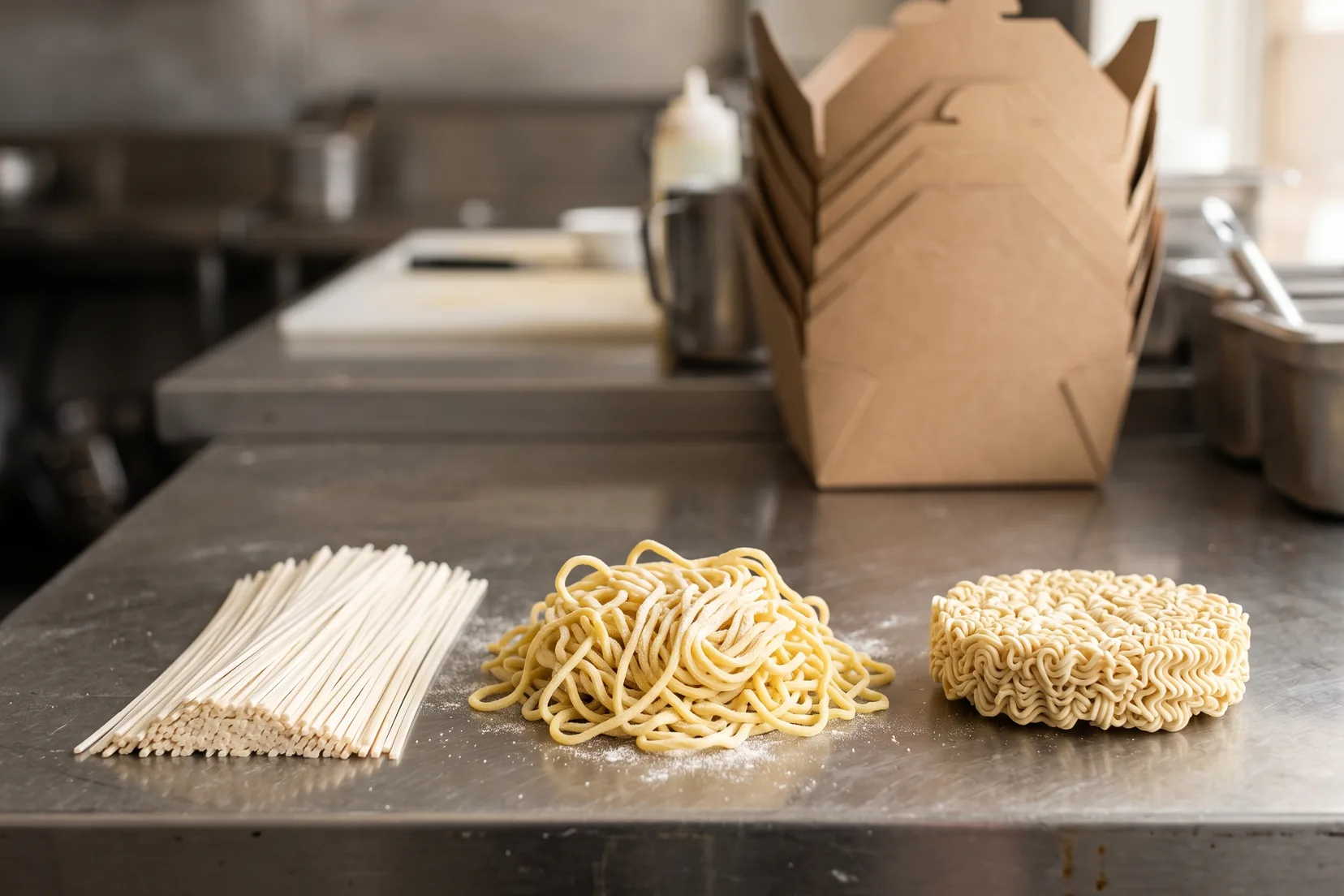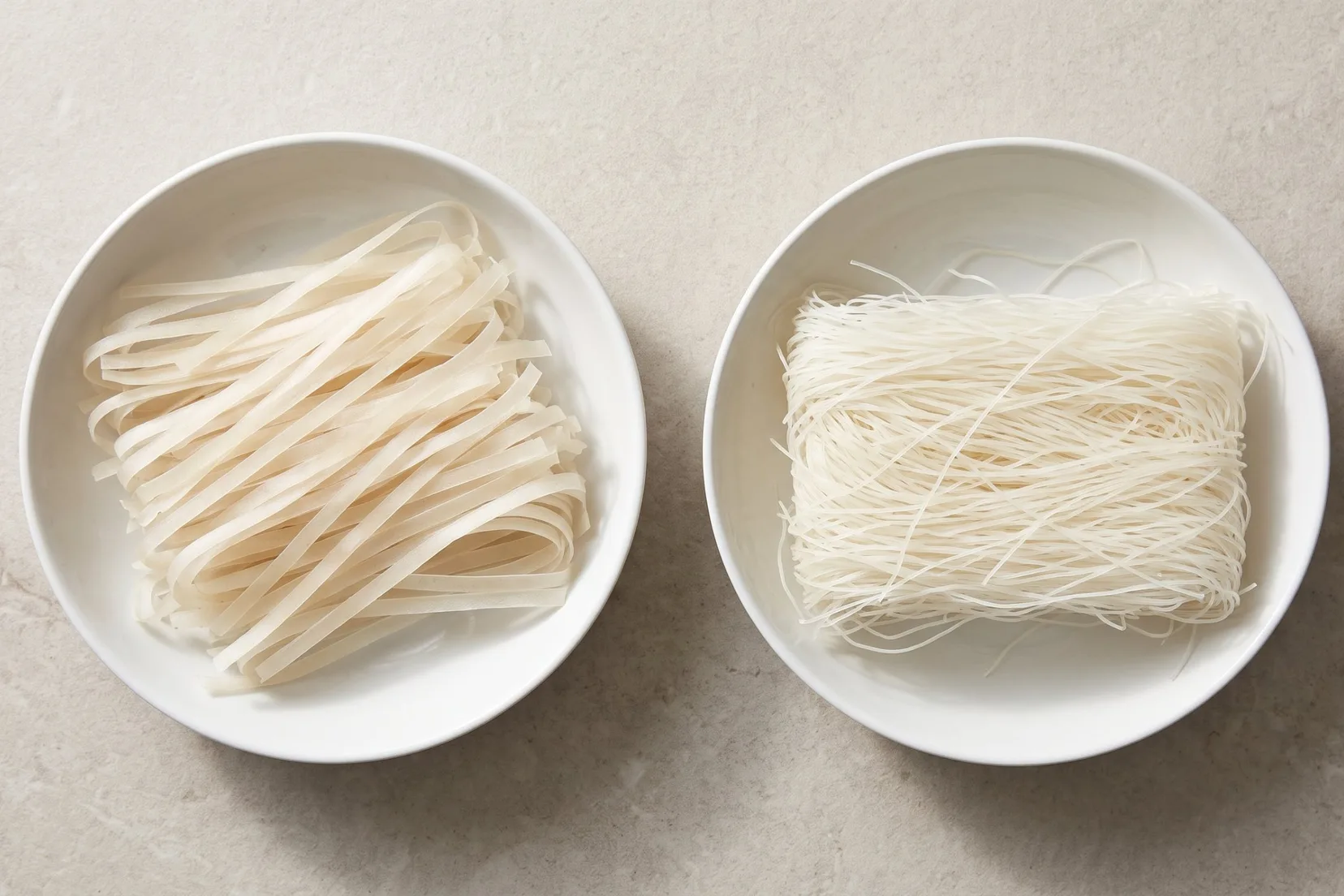
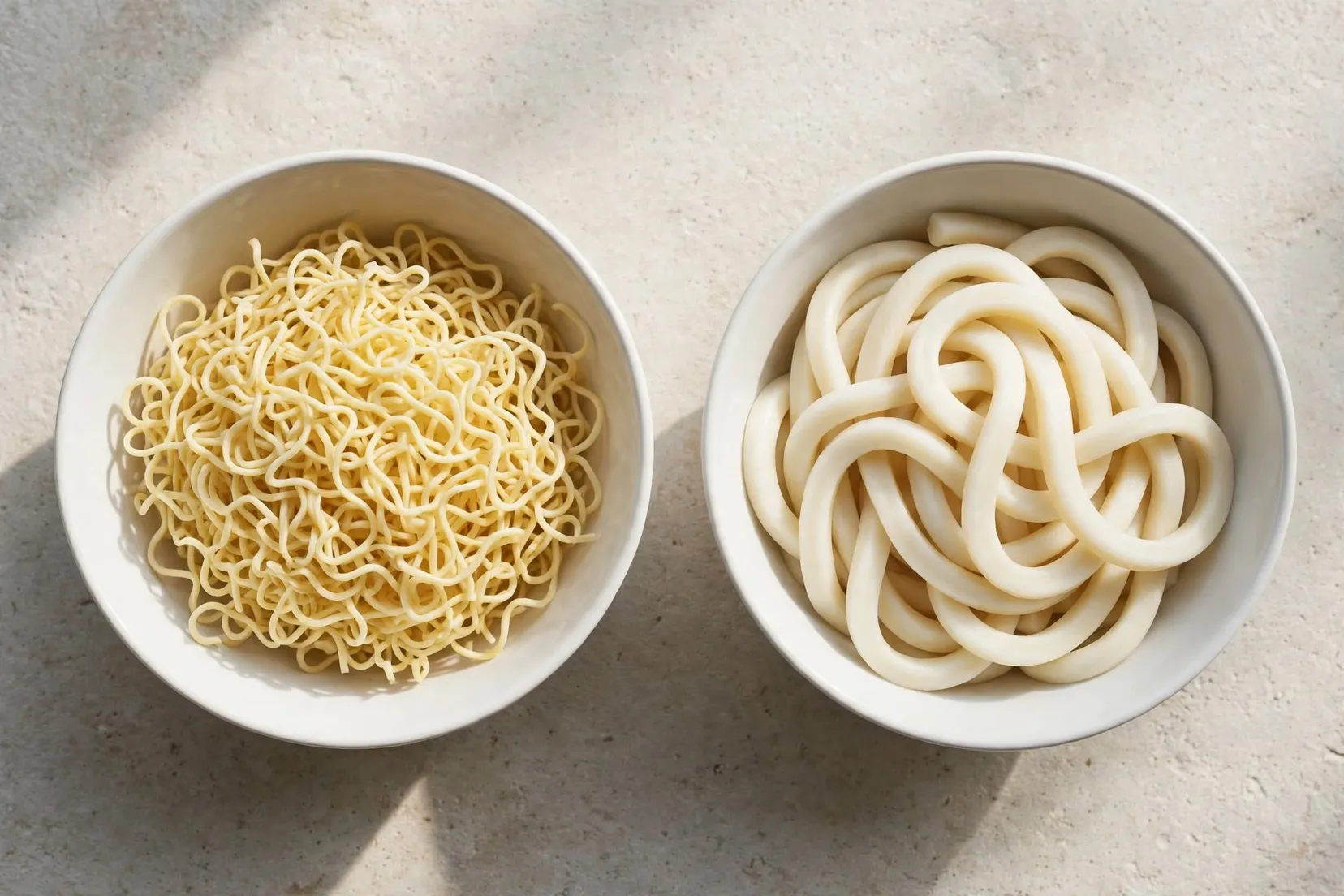
Short answer: both are wheat noodles, and the dry versions can share the same three ingredients. Udon is cut thick and served soft. Ramen is cut thinner, often made springy with alkaline salts, and built for a rich broth.
| Attribute | Ramen | Udon |
|---|---|---|
| Base | Wheat flour, water, salt | Wheat flour, water, salt |
| Alkaline salts | Often, for spring and yellow color | Usually not |
| Cut | 1.75, 2 and 3 mm dry; 2.3 mm fresh | Thick; 6.85 mm on the fresh protein line |
| Bite | Springy, firm | Soft, with a firm center |
| Broth | Rich: shoyu, shio, miso, tonkotsu | Light, cold with a dip, or stir-fried |
| Fresh shelf life | 14 months, room temperature | 12 months |
| Instant format | Yes, fried and non-fried | No published instant line |
Put a bag of dry ramen and a bag of dry udon side by side and read the backs. On our published lines, the ingredient statements match word for word. The difference is in the cut, the bite and the bowl each one is made for.
Same Flour, Different Noodle
Our published dry ramen and dry udon both read wheat flour 88 percent, water 11 percent and salt 1 percent. Both test at 12.1 percent moisture, both hold 24 months, and both read 363 kcal, 11 g protein and 1.6 g fat per 100 g.
So the panel will not tell a buyer which noodle is which. The cut will. Read the dry ramen and dry udon specifications side by side and the first rows are the same.
That is a useful thing to know before you write a brief. "Ramen" and "udon" are not recipes. They are a cut, a texture and a serve, built on a very simple dough.
The Cut and the Bite
Udon is the thick one, and the width is why it eats soft and filling. The protein line of our fresh udon is cut at 6.85 mm. The published dry ramen runs in 1.75, 2 and 3 mm cuts, and the fresh ramen standard is a 2.3 mm round noodle. Japan's standard for dried noodles sets the line at 1.7 mm: a machine-made dried udon is 1.7 mm or more across.
Ramen often gets its bite from kansui, alkaline mineral water that tightens the dough, makes it springy and turns it pale yellow. Udon is usually made without it. A pale white noodle with a soft surface and a firm center is udon. A yellow, springy noodle is usually ramen.
Color alone will not settle it. Our shelf-stable fresh ramen is light yellow from curcumin, not from alkaline salts. If your recipe needs an alkaline noodle, write it into the brief.
The Bowl Each One Is Built For
Ramen is a broth noodle. Udon is a noodle that can carry a light broth, a cold dip or a hot pan.
A ramen bowl usually means a rich broth, a seasoning base and toppings, with the noodle cooked separately and added at the end. Thinner cuts give way sooner in hot broth, so ramen is best eaten straight away.
Udon shows up three ways: hot in a light broth, cold with a dipping sauce, or stir-fried as yaki udon. A thick noodle takes heat and sauce in a pan without breaking, and it holds its shape longer in a bowl.
Dry, Fresh and Instant
Format changes more than the name does. Both noodles come dry and fresh. Of the two, only ramen has a published instant line.
- Dry ramen and dry udon hold 24 months at about 12 percent moisture and cook from hard. The kitchen sets the texture.
- Fresh ramen is made at 50 to 75 percent moisture, tested at 61, and holds 14 months at room temperature.
- Fresh udon tests at 68 percent moisture on the standard line and holds 12 months. The standard line reads 3 g protein per 100 g, the protein line 11.4 g.
- Instant ramen is cooked and dried a second time, fried or with hot air. A fried cake reads 16.7 g fat per 100 g, a non-fried cake 1.1 g. Both hold 24 months.
When you compare fresh and dry panels, remember the water. A fresh noodle is more than half water, so every figure per 100 g reads lower. Compare per cooked portion.
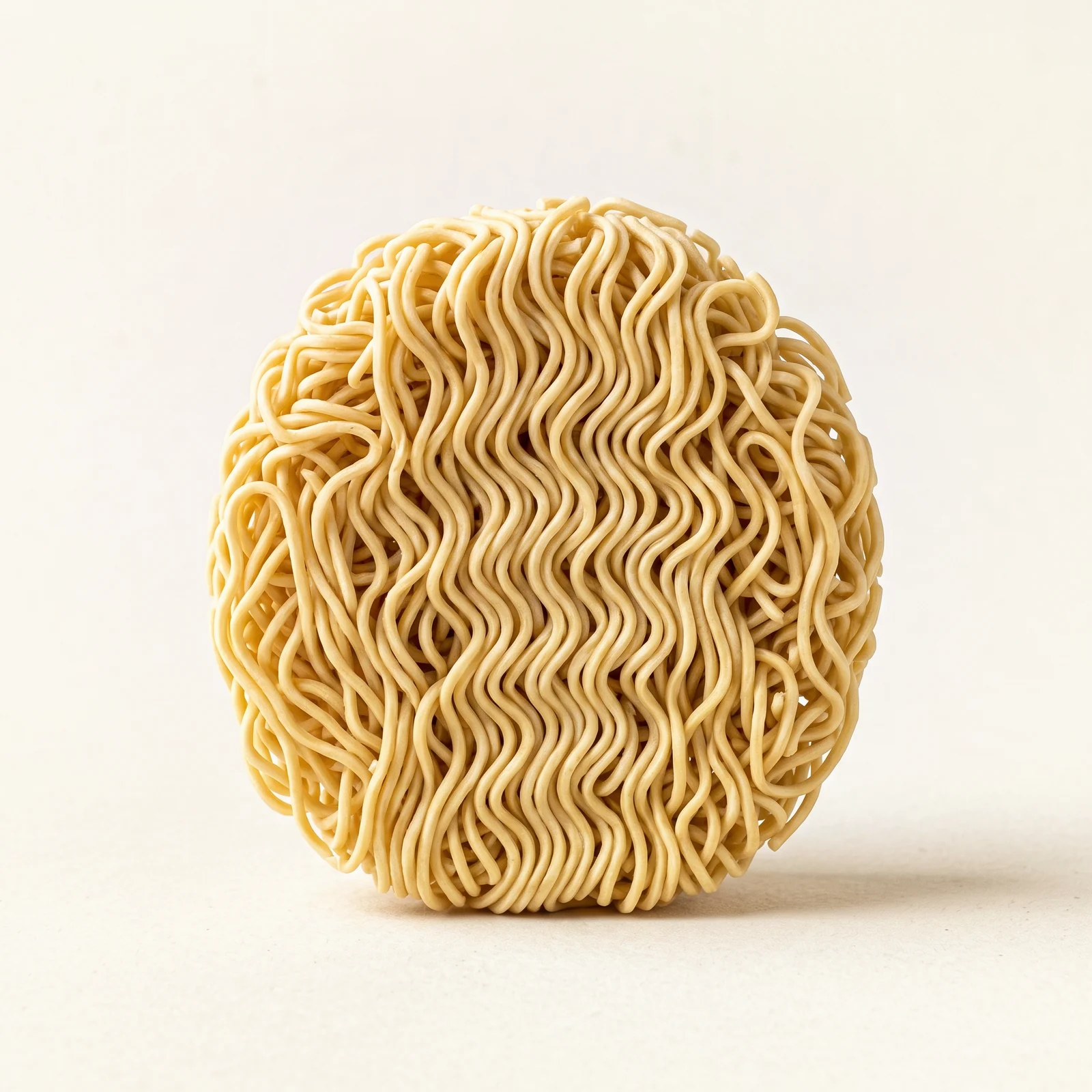
Bulk ramen noodles, dry
- 24 months shelf life
- Allergens: Wheat
- Origin: China
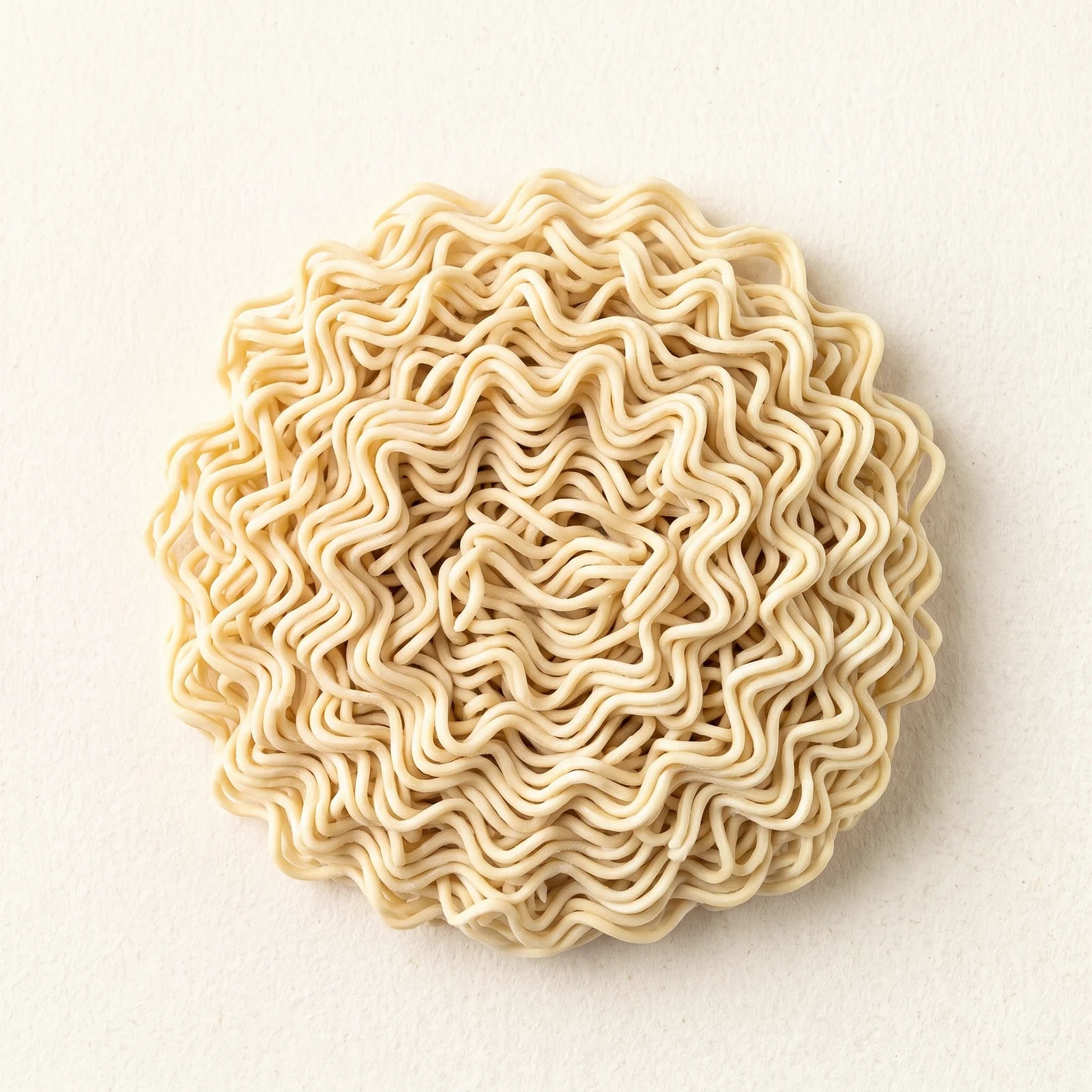
Wholesale fresh ramen noodles, shelf stable
- 14 months shelf life
- Allergens: Wheat
- Origin: China
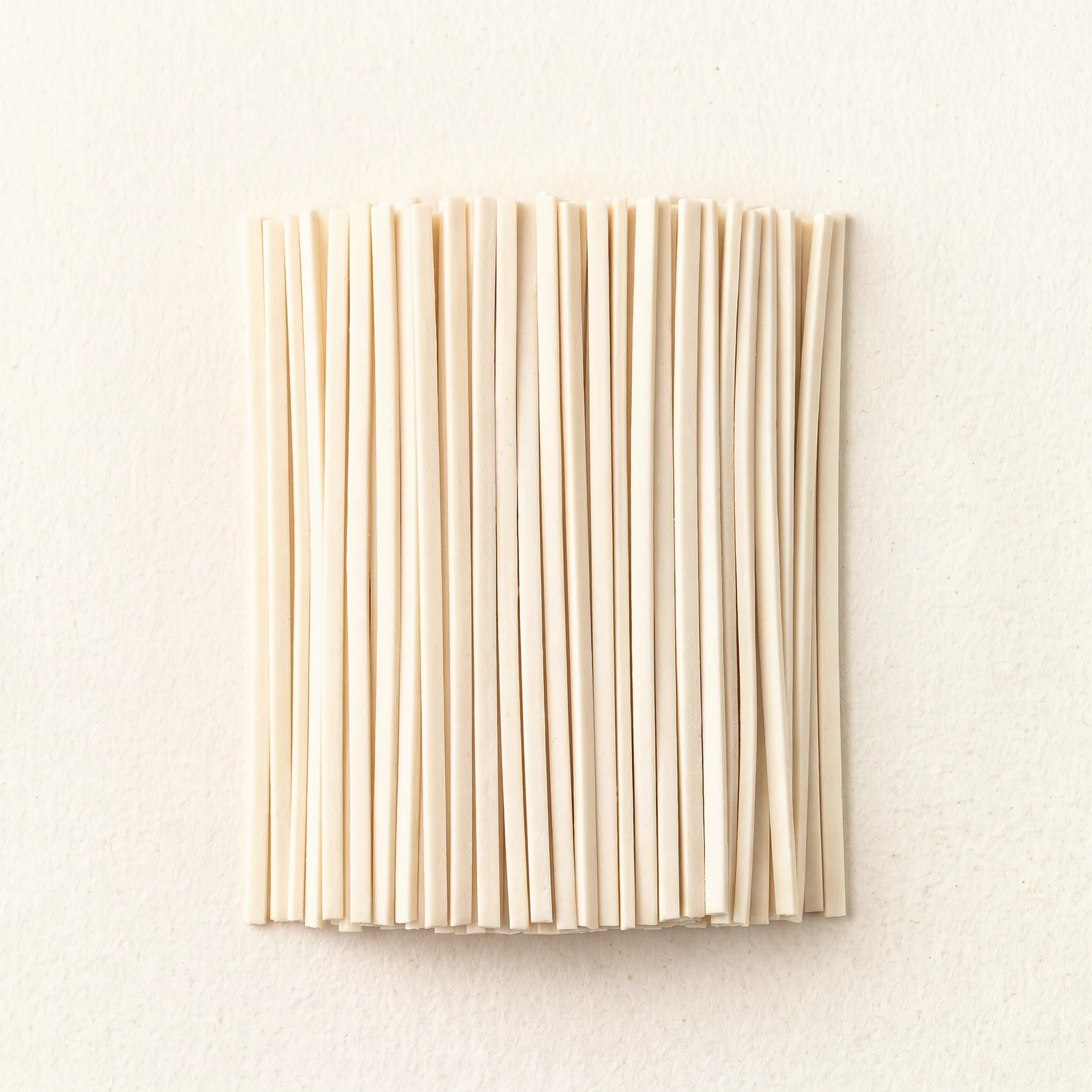
Bulk dry udon noodles
- 24 months shelf life
- Allergens: Wheat
- Origin: China
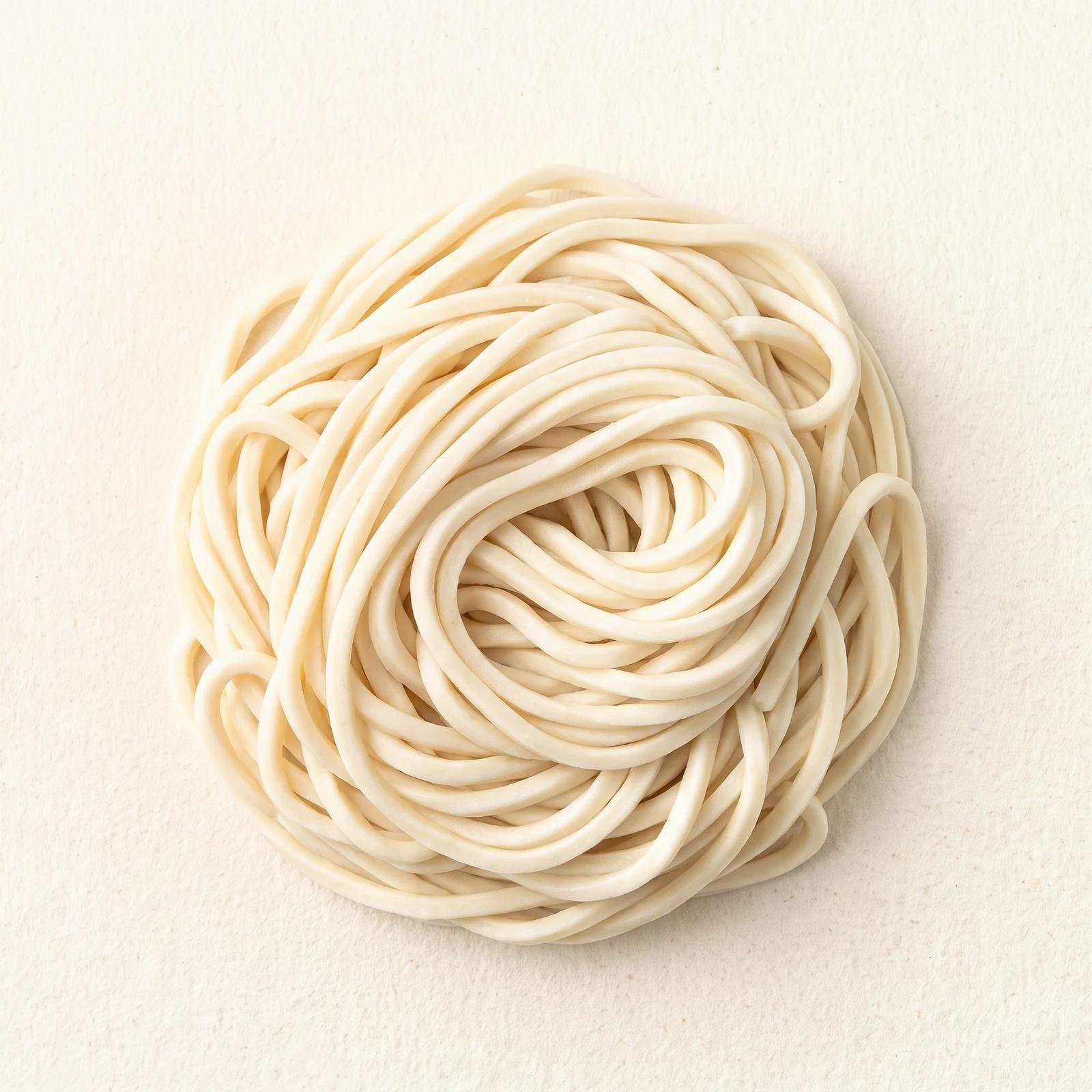
Wholesale fresh udon noodles, standard and protein
- 12 months shelf life
- Allergens: Wheat
- Origin: China
Buying One, or Both
If you buy both, the brief is the same shape for each. Name the format, the cut, the formulation and the pack.
For ramen, add whether the dough is alkaline, and for instant, fried or non-fried. For udon, add standard or protein line, and the protein figure your panel has to show. For either, send a bag of the noodle you use now if you are replacing one. A sample settles cut and color faster than a description.
Every lot ships with a certificate of analysis against the specification you sign, and you get samples before you commit.
The ramen noodles guide covers ramen in full, from the dough to the spec sheet.
Frequently Asked Questions
Can I use udon instead of ramen?
In a pinch, but the bowl changes. Udon is thicker and softer and suits a lighter broth. Ramen is thinner, usually springier, and holds up to a rich broth. Pick by the broth and the hold, not by what is on the shelf.
How much thicker is udon than ramen?
Our fresh udon protein line is cut at 6.85 mm. The published dry ramen runs in 1.75, 2 and 3 mm cuts, and the fresh ramen standard is a 2.3 mm round noodle. A thicker cut takes longer to cook and holds its texture longer in the bowl.
Is udon healthier than ramen?
Not as a rule. The published dry ramen and dry udon both read 363 kcal and 11 g protein per 100 g. Instant ramen is a different case: a fried cake reads 16.7 g fat per 100 g, a non-fried cake 1.1 g.
Are ramen and udon gluten free?
No. Both are wheat noodles, and every line we publish declares wheat. In the US, a gluten-free claim means less than 20 ppm gluten.